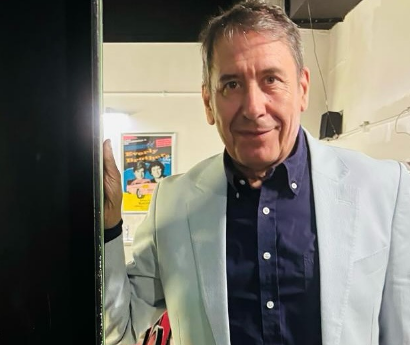
Julian Miles “Jools” Holland was born on 24 January 1958 in Blackheath in southeast London. He grew up in Deptford (a working-class area of southeast London) and later described himself as “a working-class boy from Deptford” whose extended family helped raise him.
His parents, Derek and June, married young but separated when he was still a child. Around age 11, Holland went to live with his maternal grandparents; his grandmother let him play on their piano in the family home.
He also has twin younger brothers, Richard and Christopher; after he moved out of his grandparents’ home he lived with his father while his mother took the twins to Kent. Holland’s parents were musical and encouraged his interest in music. His mother played piano, and both parents enjoyed blues, gospel and classical music.
He began playing piano himself at about age seven, and by age eight could play fluently by ear. He taught himself the boogie-woogie piano style by asking his uncle David (a semi-professional musician) to show him how.
In school he chose music as a subject in fact he was the only student in his year to do so but he left formal schooling in his mid-teens (as he later recalled, he was “invited not to come back”).
| Detail | Information |
| Full Name | Julian Miles “Jools” Holland |
| Date of Birth | Born on 24 January 1958 |
| Birthplace | Blackheath, southeast London |
| Childhood Area | Raised in Deptford, London |
| Family Background | Grew up in a working-class family |
| Parents | Son of Derek and June Holland |
| Musical Influence at Home | Parents encouraged music; mother played piano |
| Early Piano Access | Played piano at grandparents’ home |
| Started Piano | Began playing around age seven |
| Natural Ability | Could play fluently by ear by age eight |
| Early Training | Learned boogie-woogie from his uncle |
| Education | Left school in his mid-teens after choosing music |
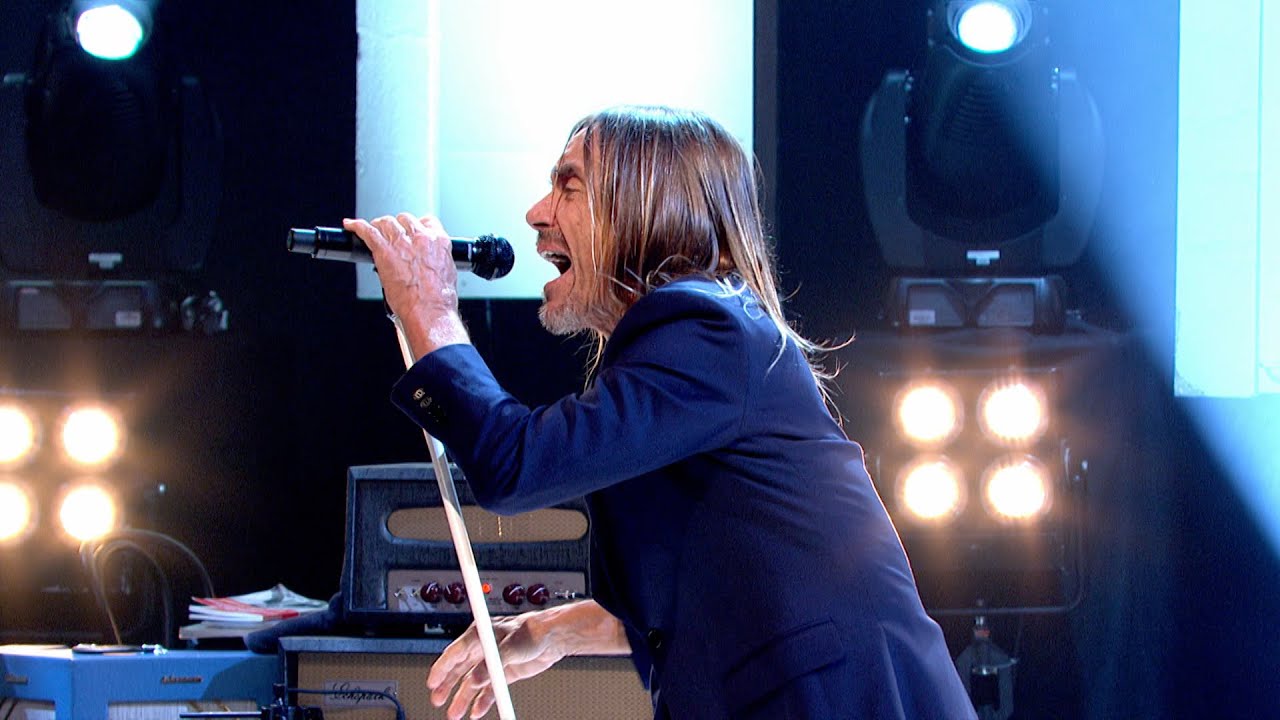
Iggy Pop - Lust For Life | Later… with Jools Holland
Career Beginnings
Jools Holland’s professional career began as the teenage pianist of the new wave band Squeeze. At 15 he joined Squeeze alongside Glenn Tilbrookand Chris Difford, contributing to early hit singles like “Up the Junction” and “Cool for Cats”. These songs gave the band rapid success in the late 1970s, including U.S. tours that took them as far as New York’s Madison Square Garden.
After leaving Squeeze, Holland formed his own band and in 1987 created The Jools Holland Big Band. This ensemble quickly expanded into his 19-piece Rhythm & Blues Orchestra, establishing his reputation as a bandleader and live performer.
International Breakthrough
Building on Squeeze’s popularity, Holland’s career gained global momentum in the 1980s and 1990s. Squeeze’s U.S. breakthrough with Argybargyexposed him to international audiences.
Holland then leveraged his television fame as co-presenter of The Tubein the 1980s and his bandleading skills to tour worldwide. By the 2000s his Rhythm & Blues Orchestra was performing at major venues across Europe, North America and beyond, selling millions of albums in the process.
This global touring helped establish Holland as a “doyen of the international music scene”, and his long-running BBC music show also attracted viewers and musicians from around the world.
Major Performances & Concert Highlights
Holland has headlined many high-profile concerts. He was part of the all-star lineup at the Queen’s Diamond Jubilee concert in London in June 2012. In 2017 he brought his big band to the BBC Proms, underpinned by legendary Stax soul artists such as Booker T. Jonesand William Bell.
More recently, in June 2022 Holland and his Orchestra “Raised the Roof” at a star-studded charity gala at the Royal Albert Hall in aid of Prostate Cancer UK. Earlier in his career he co-hosted benefit concerts like the 2004 Teenage Cancer Trust show at the Royal Albert Hall and a 2005 tsunami-relief concert in Cardiff featuring Eric Clapton.
These engagements with high-profile causes and venues have become a hallmark of his performance career and he has headlined BBC’s annual New Year’s Eve Hootenanny special on BBC Two.
Recordings & Discography
Holland has an extensive recording catalogue blending blues, jazz, boogie-woogie and R&B. His first solo release was the Boogie Woogie ’78EP in 1978, followed by the album World of His Ownin 1990.
Through the 1990s he issued records like Sex & Jazz & Rock & Rollin 1996, and in 2001 released Small World Big Band, launching his successful series of big-band “Friends” albums.
These albums featured multiple guest singers; notable collaborators include Sting, Chrissie Hynde, George Harrison, Norah Jones, Eric Clapton and David Gilmour. In the 2010s Holland explored themed projects: The Golden Age of Songin 2012, Sirens of Songin 2014 and Jools & Rubyin 2015 compiled big-band versions of standards with guest vocalists.
He continued this approach with Pianoin 2016, a solo-instrumental homage to the blues piano, and with duet albums like As You See Me Nowin 2017 with José Feliciano and A Lovely Life to Livein 2018 with Marc Almond.
His 2021 album Pianola – Piano & Friendsfeatured duets with star pianistssuch as Lang Lang, Herbie Hancockand Tom Jones. Most recently, Holland teamed with Rod Stewart for Swing Feverin 2024, a collection of 1950s-style big-band standards. Swing Feverreached No. 1 on the UK Albums Chart, giving Holland his first-ever UK chart-topping record.
Awards & Professional Recognition
Holland’s achievements have been formally recognized at the highest levels. In 2003 he was appointed an Officer of the Order of the British Empire OBE for services to the British music industry. He also holds an honorary Doctor of Music degree awarded by the University of Kent in 2002.
In broadcasting, his BBC Radio 2 music programme won the Sony Radio Academy Silver Award for “Best Specialist Music Programme” in 2010, and he earned the Sony Gold Award for Music Broadcaster the same year.
More recently he received Jazz FM’s Impact Award in 2022, honoring his decades-long contribution to jazz and blues through performance and broadcasting. He is also a Deputy Lieutenant of Kent, an honorary civic appointment.
Collaborations With Orchestras & Conductors
While primarily known for blues and jazz, Holland has occasionally branched into orchestral and classical settings. In 2007 he composed a new liturgical Massthat was performed at two historic English cathedrals as part of a charity concert series.
He has also worked with symphonic forces; the BBC Proms “Sound of Soul” concert in 2017 paired his Rhythm & Blues Orchestra with the BBC Symphony Orchestra and soul legends on the Royal Albert Hall stage. These projects show Holland’s versatility, but the bulk of his career remains focused on his own big band and popular music collaborations.
Recent Career Activity
Holland remains musically active. In 2021 he released Pianola – Piano & Friends, continuing to feature high-profile guest artists. In radio and television he celebrated milestones: his BBC Two series Later… with Jools Hollandmarked its 30th anniversary in 2022, and he launched a new Saturday lunchtime series on BBC Radio 3 called Earlier… with Jools Hollandshowcasing classical repertoire.
On stage, he performed the 2022 Royal Albert Hall charity gala mentioned above. His most recent album, Swing Feverwith Rod Stewart, reached No.1 in February 2024. Throughout, he has continued touring internationally with the Rhythm & Blues Orchestra and hosting his signature concerts including annual New Year’s Eve shows, underscoring his ongoing influence in modern music.
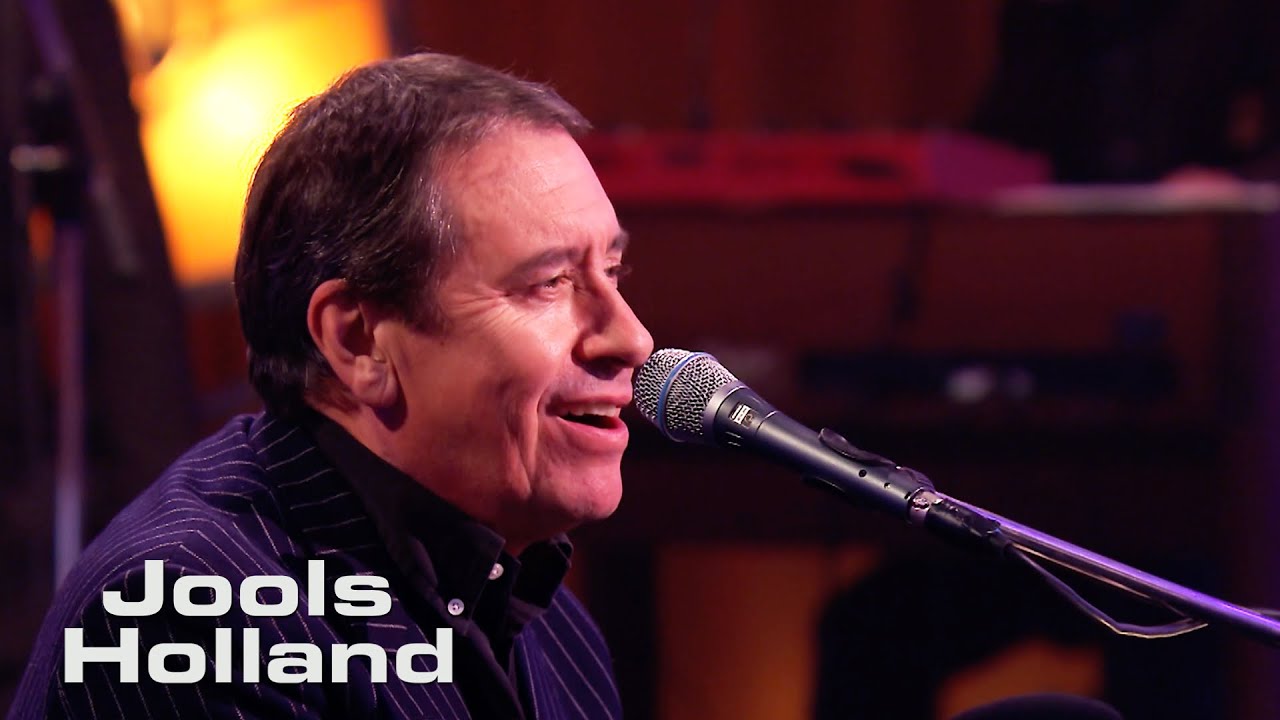
Jools Holland & his R'n'B Orchestra - Good Rockin' Tonight (Jools' Annual Hootenanny 22/23)
Performance (2025–2026)
- Autumn/Winter 2025 UK TourHeadlined a 30-date tour across the UK with his 19-piece Rhythm & Blues Orchestra, joined by special guest Imelda May. Concerts were held at major venues including London’s Royal Albert Hall, Manchester’s O2 Apollo and Glasgow’s SEC Armadillo.
- Spring/Summer 2026 TourLaunched a new UK tour (May–July 2026) extending his live run into summer. Special guest artists on this leg included singer-songwriter Roachfordand songwriter Chris Difford.
- European DatesPerformed international dates in April 2026, with concerts at Paris’s Salle Pleyel, Amsterdam’s Paradiso, Antwerp’s De Roma and Luxembourg’s Opderschmelz. These appearances at prestigious European halls underscored the tour’s broad scope.
- Key UK & Irish VenuesSummer 2026 shows included headline concerts at Dublin’s 3Arena and Belfast’s Waterfront Hall. Additional highlights were landmark UK venues like Liverpool’s Philharmonic Hall and Coventry’s Warwick Arts Centre.
- Festival AppearancesFeatured at notable music festivals, such as the Edinburgh Jazz & Blues Festival (July 2026) and Cornwall’s Stithians Fisherman’s Friends Festival (May 2026). These high-profile events showcased Holland’s blues/jazz focus to diverse audiences.
- Annual Hootenanny (BBC TV)Headlined the BBC Two New Year’s Eve 2025 “Annual Hootenanny” special, leading his orchestra in performances with star guests including Ronnie Wood, Jessie J, Imelda May, Craig David, Heather Small and The Kooks.
- Orchestra ImpactHolland’s 19-piece Rhythm & Blues Orchestracontinues to draw very large audiences (exceeding 300,000 per year worldwide). This level of attendance reflects the band’s enduring popularity and the professional scale of his live performances.
Technical Approach And Piano Control
| Area | Verified Characteristics |
| Hand Technique | Strong independence between left and right hand |
| Left Hand Style | Continuous, rhythmic bass patterns |
| Pedal Use | Minimal sustain pedal for clarity |
| Practice Method | Uses metronome and technical exercises |
| Touch Control | Learned to lighten touch for endurance |
| Tone Preference | Punchy, rhythmic, and blues-focused |
| Musical Identity | Balance of precision and energetic expression |
Holland’s technique centers on extreme independence of the hands and unflagging rhythmic precision. In fast boogie and stride numbers he builds the left hand bass pattern separately until it is ingrained, describing the coordination as akin to “rubbing your tummy and stroking your head” simultaneously.
He deliberately minimizes sustain pedal usage in this repertoire, preferring a dry, staccato touch so that the left hand bass line cuts through clearly. This disciplined left hand “drum” keeps the pulse steady.
To maintain accuracy, Holland practices technical exercises glissandi and arpeggios across keys and even uses a metronome to check his speed. Though he naturally hits the keys hard, he has consciously learned to “lighten up” his touch for endurance and clarity.
In sum, his control strategy is to internalize each hand’s role fully, keep the attack precise, and practice methodically to execute rapid passages without sacrificing ensemble timing.
Tone, Touch, And Sound Color
Holland favors a rich yet punchy piano tone, with a wide palette of colors across styles. In the studio he typically records on a Yamaha acoustic grand for its powerful bass and full resonance, but on tour he relies on a high end Yamaha digital stage piano GranTouch loaded with samples to simulate those acoustic qualities in a portable format.
He also uses vintage keyboards for example, a Wurlitzer electric spinet and an old Steinway, each chosen for its unique character. His touch varies with the material: in upbeat boogie numbers he often plays with a bright, percussive edge and sharp attack, whereas in slower jazz or gospel tinged pieces he softens into a rounder, legato sound.
Reviewers note that he can move from contrapuntal Baroque style lines to full bore blues riffs while preserving his signature tone one critic observed his playing shift “from the Baroque counterpoint of ['Christabel'] to the blistering boogie woogie of ['Bang And Pop'],” yet still remain unmistakably his. The result is both a crisp, rhythmic clarity in fast passages and a warm, singing quality on chordal or melodic figures, all delivered with a singular, robust piano voice.
Rhythm, Phrasing, And Structural Clarity
A steady, danceable groove is fundamental to Holland’s phrasing. He locks firmly into the pulse, rarely altering tempo once the feel is established. As he himself notes of boogie woogie, it’s “all about timing and making people want to dance”. In practice this means he keeps strict, even tempi in blues and swing tunes, avoiding unnecessary rubato.
His rhythmic accents offbeat chords, swung eighth note patterns, rolling left hand bass figures are placed clearly, so that the song forms often 12 bar blues or big band grooves are easily perceived.
Structurally he tends to mark phrases on the beat and retrace themes crisply, which provides a transparent framework for solos and riffs. Live accounts often describe audiences on their feet throughout the performance, indicating that Holland’s phrasing consistently emphasizes the underlying groove.
Interpretative Approach To Repertoire
Holland approaches material with an ear first, improvisatory mindset rather than strict literalism. He gravitates toward pieces that resonate emotionally or rhythmically, drawing on his lifelong love of jazz, blues and related genres.
Although he is primarily associated with classic R&B and jazz repertoire, he does not shy away from incorporating other idioms. For example, on various projects he has explored gospel phrasing, big band swing arrangements, and even classical motifs one album commentary notes he quoted Bach’s Prelude No. 1 within a boogie woogie adaptation.
His performances typically blend fidelity to a tune’s melody with liberal reharmonization and rhythmic variation, reflecting influences from Thelonious Monk, Oscar Petersonand New Orleans styles alongside boogie traditions.
Holland himself emphasizes “feel” and personal connection; he advises finding pieces or interpretations that “connect” to the player. In short, he treats each composition as a living thing: the basic form and theme guide the performance, but he freely improvises around them, spicing classic tunes with contemporary or genre crossing twists while maintaining the music’s essential character.
Balance Between Precision And Expression
Holland strikes a balance between tight technical control and loose, energetic expression. He spends ample time rehearsing challenging runs and checking details for example, practicing fast glissandi or chord shapes and monitors tempo precisely to prevent unintentional speeding or dragging.
Simultaneously, he values the raw excitement of a spontaneous take. He famously recalls advice from David Gilmour to capture the “first take” of a performance, even if it is “a bit ragged,” because it often contains the most vitality.
In the studio and on stage, Holland tends to record quickly with minimal overdubs whenever possible, preserving the immediacy of a live feel. The effect is that his recordings and solos may carry an informal looseness or crowd pleasing swagger, yet are underpinned by disciplined rhythm and articulation. This duality meticulous preparation combined with embracing imperfection gives his playing both solidity and spontaneity.
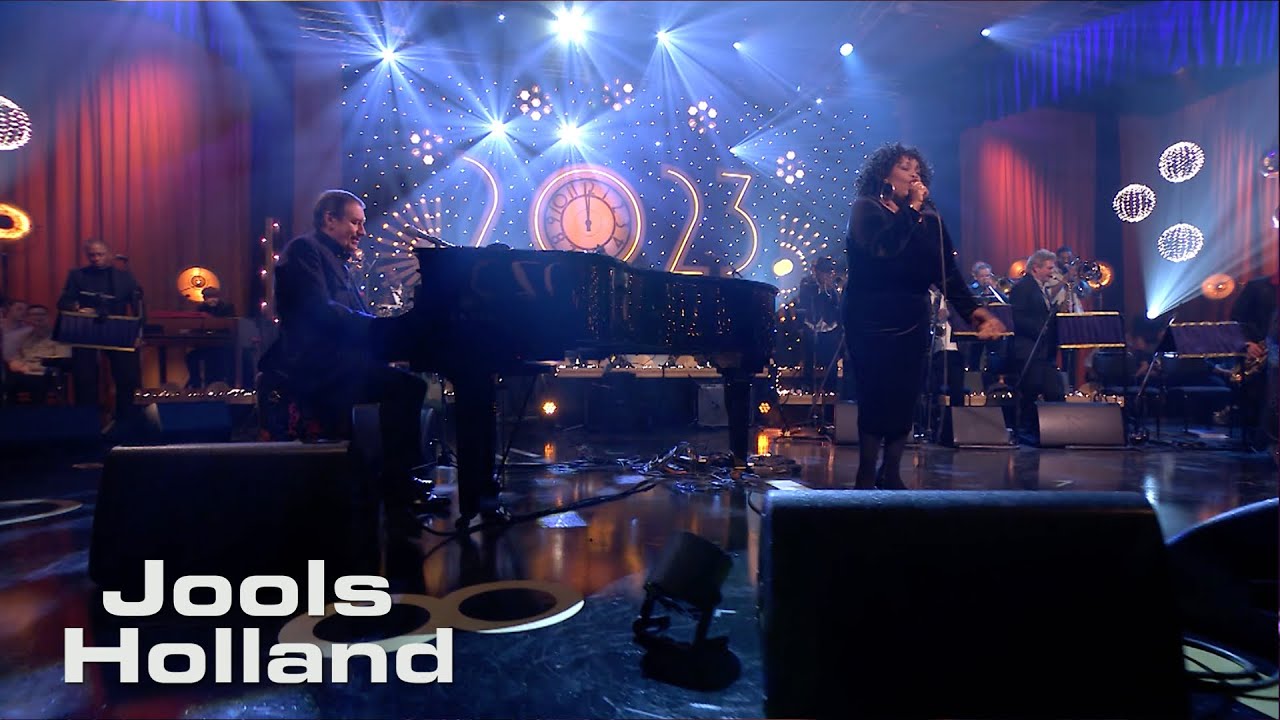
Jools Holland & his R'n'B Orchestra and Ruby Turner - Roll Out Of This Hole (Hootenanny 22/23)
Critical Observations And Musical Identity
Across the critical literature, Holland’s playing is consistently characterized as vigorous, entertaining and steeped in tradition. Reviewers praise his concerts for their “jaw dropping performances on the piano” grounded in “good, old fashioned ‘boogie woogie’ infused rhythm and blues”.
His style is frequently described as the archetypal British boogie woogie sound: high energy and driving. His relentless left hand patterns have even drawn praise from blues legends B.B. King remarked that Holland “has got that left hand that never stops”, highlighting his reputation for unflagging bass lines.
Audiences are often on their feet by the end of a set, reflecting how his rhythmic force gets people dancing. Critics also note that his exuberance can divide listeners: some “weep with joy” at the swinging passion, while others find the steady onslaught almost exhausting.
Commentators observe that Holland’s identity lies in updating past styles he channels old jazz and blues idioms with a modern twist. As one profile puts it, he is “an expert at updating something from the past,” skillfully weaving vintage big band, gospel and blues elements into a contemporary show.
In sum, Holland is seen as a consummate entertainer and ambassador for boogie woogie piano: his musical identity is an unmistakable blend of disciplined rhythm, charismatic flair and deep rooted respect for jazz and blues tradition.
Jools Holland Net Worth
As of 2026, Jools Holland’s net worth is estimated to be between $4 million and $6 million. He has earned this mainly through his decades-long music career: he was a founding member of the rock band Squeeze and later released dozens of albums while touring regularly with his Rhythm & Blues Orchestra.
Holland also hosts popular BBC music TV programs (including Later…with Jools Hollandand its annual New Year’s Eve Hootenanny). He supplements his income with other projects such as writing books and hosting a weekly radio program on BBC Radio 2.
FAQs
1. Who Is Jools Holland Best Known As?
Jools Holland is best known as a British pianist, bandleader, and television presenter. He is widely recognized for hosting the BBC music programme Later… with Jools Hollandand for leading his Rhythm & Blues Orchestra.
2. Was Jools Holland A Member Of The Band Squeeze?
Yes, Jools Holland was an original member of the band Squeeze, joining as their keyboard player in the mid-1970s. He contributed to the band’s early success before leaving to pursue solo and broadcasting projects.
3. What Style Of Music Does Jools Holland Play?
Jools Holland primarily plays boogie-woogie, blues, jazz, and rhythm and blues. His piano style is known for its strong left-hand bass patterns and rhythmic drive, rooted in traditional American blues and jazz forms.
4. Has Jools Holland Received Any Official Honours?
Yes, Jools Holland was appointed an Officer of the Order of the British Empire (OBE) in 2003 for services to the British music industry. He has also received honorary academic and broadcasting awards for his contributions to music and media.
5. Is Jools Holland Still Active In Music And Television?
Yes, Jools Holland remains active as a performer, recording artist, and broadcaster. He continues to tour with his Rhythm & Blues Orchestra and regularly appears on BBC television and radio.