Songs That Shaped Social Movements On Piano
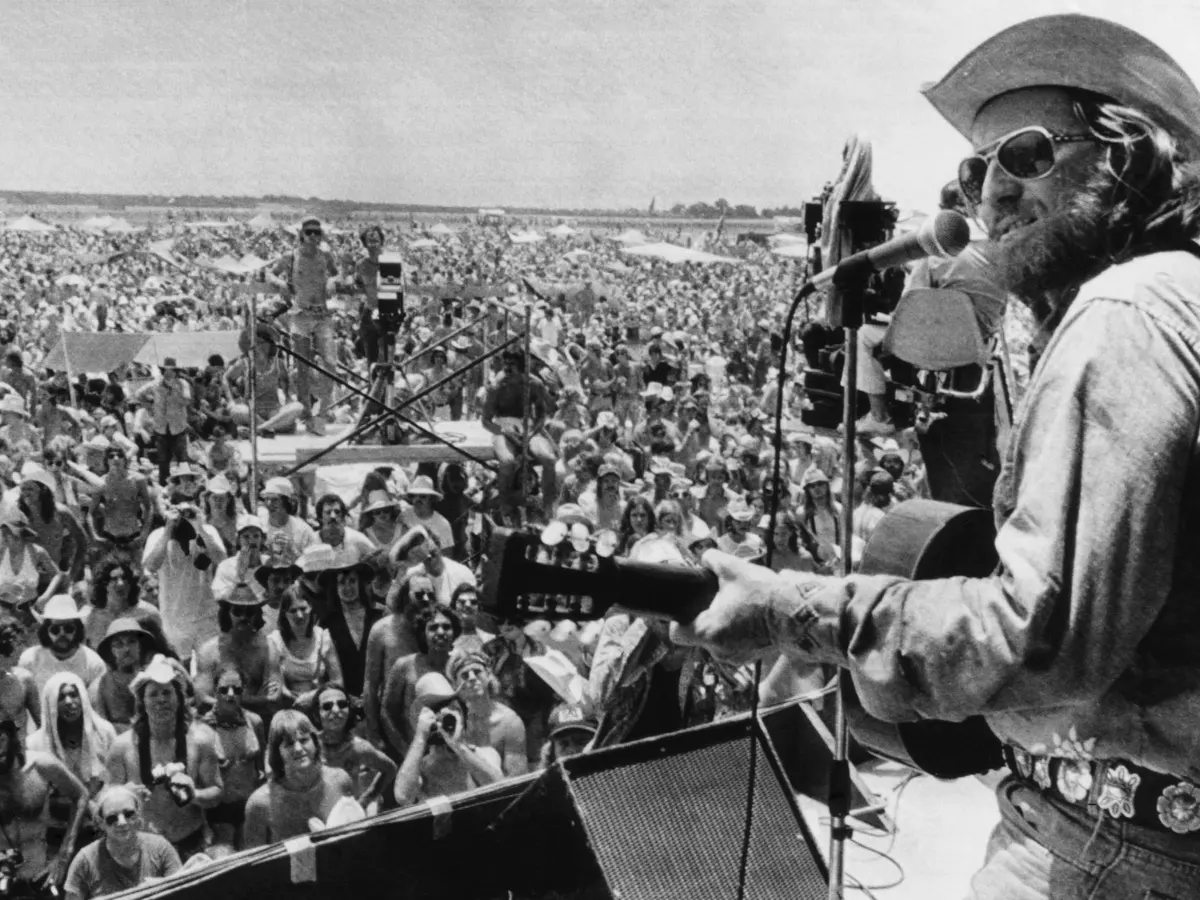
Music has long given people a voice when words alone were not enough. From civil rights marches to anti-war demonstrations and calls for equality, protest songshave united communities, inspired movements, and preserved important moments in history.
Many of these songsalso translate beautifully to the piano, allowing performers to express emotion through melody even without singing a single lyric. If you're looking for protest songs to play on piano, this collection goes beyond a simple list of famous titles.It features 60 influential songs organized by historical movement and piano difficulty, with concise background on why each one matters and practical guidance to help you choose pieces that match your skill level and performance goals.
Quick Answer: 60 Protest Songs To Play On Piano
If you're looking for a quick recommendation, start with these timeless classics:
- Blowin' in the Wind- Bob Dylan (Beginner)
- Imagine- John Lennon (Beginner)
- We Shall Overcome(Beginner)
- A Change Is Gonna Come- Sam Cooke (Intermediate)
- What's Going On- Marvin Gaye (Intermediate)
- Give Peace a Chance- John Lennon (Beginner)
- Redemption Song- Bob Marley (Intermediate)
- Fortunate Son- Creedence Clearwater Revival (Intermediate)
- People Have the Power- Patti Smith (Intermediate)
- Sunday Bloody Sunday- U2 (Advanced)
These songs represent different eras, causes, and musical styles, making them excellent starting points for building a meaningful piano repertoire.
What Makes A Song A Protest Song?
Understanding what defines a protest song helps you appreciate why these pieces continue to resonate decades after they were written.
A protest songis a piece of music that challenges injustice, questions authority, promotes peace, or advocates for social, political, environmental, or human rights. While lyrics often carry the message, the melodies themselves can become symbols of hope, resilience, and unity.
Some protest songs directly criticize governments or policies. Others focus on universal themes like freedom, equality, compassion, or human dignity. Because of their emotional depth, many adapt exceptionally well to solo piano arrangements.
Common Themes Found In Protest Songs
Many of the greatest protest songs explore themes such as:
- Civil rights
- Peace and anti-war movements
- Freedom and democracy
- Workers' rights
- Women's rights
- Environmental protection
- Economic inequality
- Human dignity
- Justice and equality
Why Protest Songs Work Beautifully On Piano
Many classic protest songs began with simple chord progressions and memorable melodies. That simplicity makes piano learning easier, especially for beginners developing rhythm, coordination, and musical confidence.
When played as instrumentals, the melody often carries the emotional message without needing words. A thoughtful pianist can communicate sorrow, hope, determination, or optimism through phrasing, dynamics, and tempo.
Tip:Knowing the story behind a protest song helps you play it with greater emotional expression.
Historical Roots Of Protest Songs
Protest songs have existed for centuries, long before they were recorded or performed on big stages. People used music to express hope, stand against injustice, and bring communities together during difficult times. Early protest music often came from folk songs, spirituals, and labor movement anthems, with messages passed from one generation to the next.
Many of these songs were written with simple melodies and repeated lyrics so that anyone could sing them. That simplicity is one reason they work so well on the piano today, allowing modern players to keep their stories and messages alive.
The Birth Of Modern Protest Songs
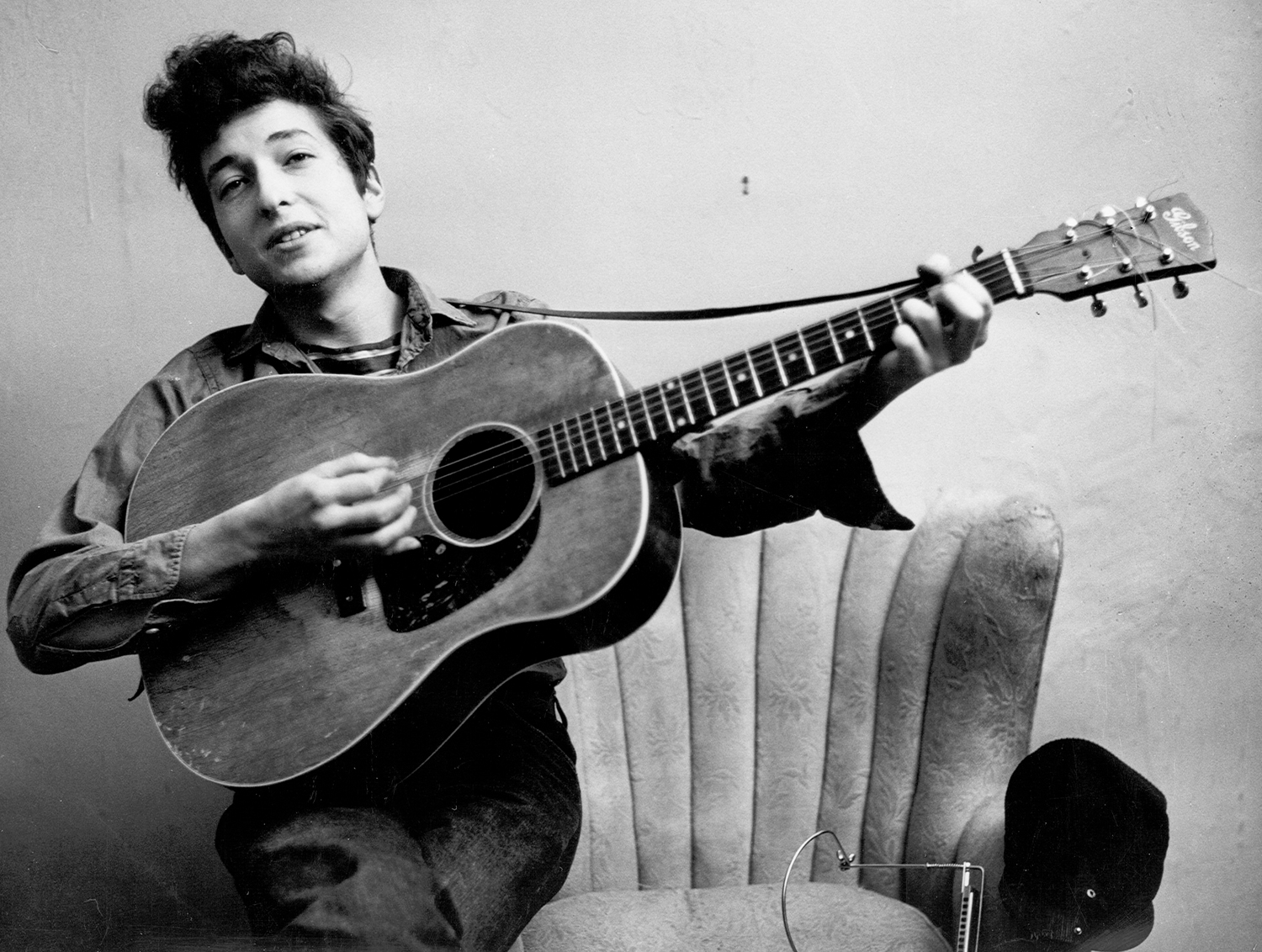
Modern protest songs became especially popular during the 1950s and 1960s, when artists used music to support movements for civil rights, peace, and social change. Musicians like Woody Guthrie, Pete Seeger, Bob Dylan, and Sam Cooke wrote songs that inspired people to speak out against injustice.
Many of these songs, including Blowin' in the Wind, We Shall Overcome, and A Change Is Gonna Come, are still performed today because their messages remain relevant. They also make excellent protest songs to play on piano, thanks to their memorable melodies and emotional impact.
Music As The Voice Of The Voiceless
Throughout history, music has given a voice to people who were ignored, oppressed, or unable to speak freely. A song can express emotions, tell powerful stories, and bring people together in ways that speeches or written words sometimes cannot. This is why protest songs have played an important role in many social movements.
Many protest songs became symbols of hope because they encouraged people to stand together during difficult times. Whether performed by a crowd or as a solo piano piece, these songs continue to remind listeners that music can inspire change and keep important messages alive.
Civil Rights Protest Songs To Play On Piano
1. We Shall Overcome
- Artist:Traditional
- Year:Traditional (popularized during the 1950s and 1960s Civil Rights Movement)
- Difficulty:Beginner
- Best for:Beginners, school performances, community events, and learning expressive playing
We Shall Overcome is one of the most recognizable protest songs in American history. Although its roots trace back to older gospel and labor songs, it became a powerful anthem of the Civil Rights Movement. Demonstrators sang it during marches, church gatherings, and peaceful protests to express hope, courage, and determination in the fight for equal rights. Its message of unity continues to inspire people around the world.
For pianists, this is one of the easiest protest songs to learn. The slow tempo, memorable melody, and simple chord progression make it ideal for beginners. Like many classical piano songs for beginners, it helps build confidence without demanding advanced technique. Even a basic arrangement can deliver a powerful emotional performance because the song's strength lies in its message rather than technical complexity.
2. A Change Is Gonna Come - Sam Cooke
- Artist:Sam Cooke
- Year:1964
- Difficulty:Intermediate
- Best for:Intermediate players, recitals, and expressive solo performances
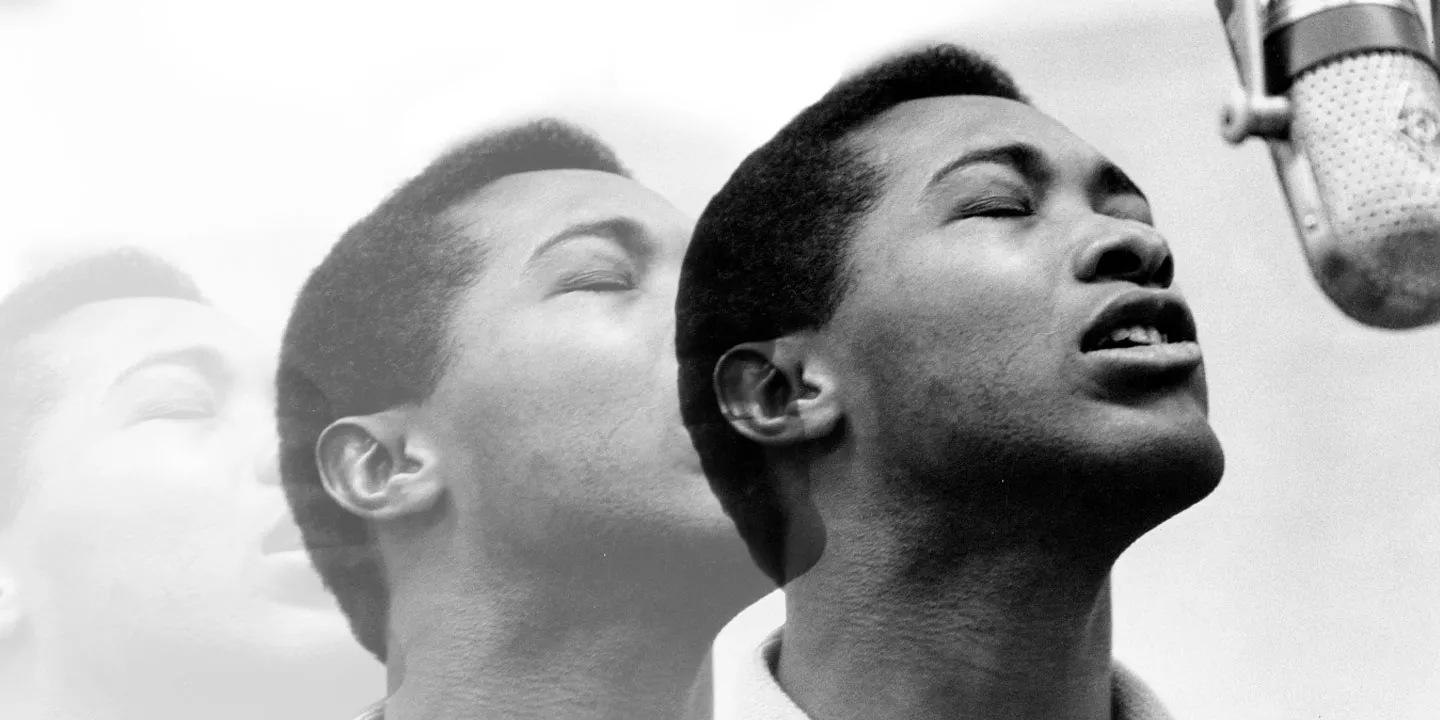
Released in 1964, A Change Is Gonna Come became one of the defining songs of the Civil Rights Movement. Sam Cooke wrote it after experiencing racial discrimination, creating a heartfelt message of hope during a period of social change. Over the years, the song has become a symbol of resilience and the belief that a better future is possible despite hardship.
On the piano, the song offers opportunities to develop expressive playing. Its soulful melody, rich harmonies, and gentle rhythm encourage careful use of dynamics and phrasing. Intermediate players can focus on conveying emotion while gradually exploring more advanced chord voicings.
3. Mississippi Goddam - Nina Simone
- Artist:Nina Simone
- Year:1964
- Difficulty:Advanced
- Best for:Advanced pianists, concerts, and studying protest music history
Nina Simone wrote Mississippi Goddam in response to the murder of civil rights activist Medgar Evers and the 16th Street Baptist Church bombing in Birmingham, Alabama. Rather than using subtle language, the song openly expresses anger, frustration, and the urgent demand for racial justice. It remains one of the most influential protest songs ever written.
Since Simone composed and performed the song on piano, it translates naturally to the instrument. The energetic rhythms, jazz-inspired harmonies, and changing dynamics make it an engaging challenge for advanced pianists who want to combine technical skill with emotional storytelling.
4. Strange Fruit - Billie Holiday
- Artist:Billie Holiday
- Year:1939
- Difficulty:Advanced
- Best for:Advanced solo performances and studying historically significant music
Strange Fruit is widely regarded as one of the most powerful protest songs ever recorded. Its lyrics draw attention to the horrific reality of racial violence and lynching in the United States, making it a landmark work in both music history and the struggle for civil rights. Billie Holiday's emotional performance helped ensure the song would never be forgotten.
The piano arrangement requires careful control of dynamics, timing, and harmony. Rather than relying on speed or technical display, the piece challenges pianists to create atmosphere and emotion through thoughtful interpretation, making it especially rewarding for experienced players.
5. Lift Every Voice And Sing
- Artist:James Weldon Johnson & J. Rosamond Johnson
- Year:1900
- Difficulty:Intermediate
- Best for:Church services, ceremonies, recitals, and community performances
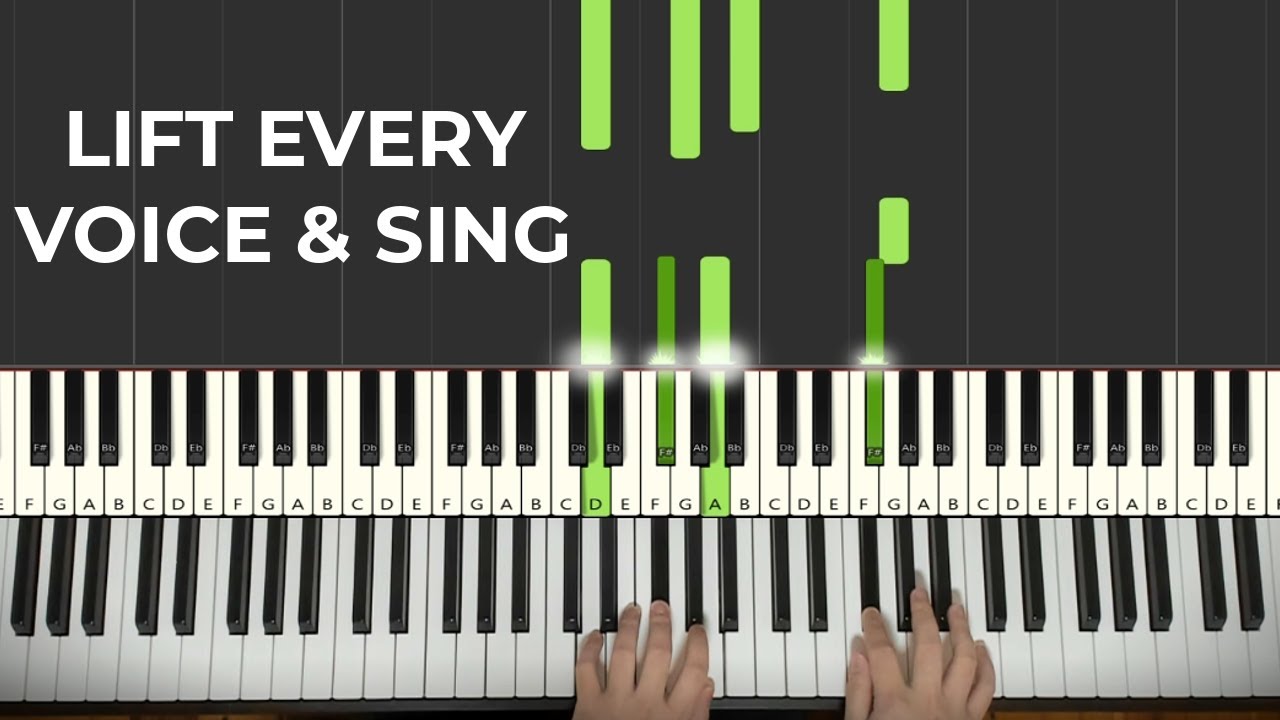
Lift Every Voice and Sing (Piano Tutorial Lesson)
Often called the Black National Anthem, Lift Every Voice and Sing celebrates hope, perseverance, and faith in the face of adversity. Written as a poem by James Weldon Johnson and later set to music by his brother J. Rosamond Johnson, it has become an enduring symbol of resilience and unity.
Its hymn-like melody makes it especially well suited to piano. Intermediate players can use expressive dynamics and balanced voicing to highlight the song's uplifting character while building confidence with chord-based accompaniment.
6. Keep Your Eyes On The Prize
- Artist:Traditional
- Year:Traditional (popularized during the Civil Rights Movement)
- Difficulty:Beginner
- Best for:Beginners, classrooms, and group performances
Keep Your Eyes on the Prize became one of the best-known freedom songs during the Civil Rights Movement. It encouraged marchers to remain hopeful and determined despite the challenges they faced. Its simple message of perseverance continues to resonate with audiences today.
For beginner pianists, the song is approachable because of its repetitive melody and straightforward chord progression. It provides an excellent opportunity to practice steady rhythm, smooth transitions, and expressive playing without overwhelming technical demands.
7. Ain't Gonna Let Nobody Turn Me Around
- Artist:Traditional
- Year:Traditional (adapted during the Civil Rights Movement)
- Difficulty:Beginner
- Best for:Beginner practice, group singing, and educational settings
Originally rooted in traditional spiritual music, Ain't Gonna Let Nobody Turn Me Around became a popular anthem during peaceful demonstrations for civil rights. The song encouraged participants to remain strong, united, and committed to achieving justice through nonviolent action.
Its repetitive structure makes it one of the easiest protest songs to play on piano. Beginners can quickly memorize the melody while practicing consistent rhythm and confident chord changes, making it a useful addition to any early piano repertoire.
8. Eyes On The Prize
- Artist:Traditional
- Year:Traditional (Civil Rights era adaptation)
- Difficulty:Beginner
- Best for:Beginners, school music programs, and community performances
Eyes on the Prize shares the same message of determination and hope that inspired countless people during the Civil Rights Movement. Frequently sung during marches and public gatherings, it reminded participants to stay focused on the goal of achieving equality and justice.
Its gentle melody and uncomplicated harmony make it ideal for beginning pianists. Because the technical demands are low, players can concentrate on shaping the melody and expressing the song's uplifting message.
9. Abraham, Martin And John - Dion
- Artist:Dion
- Year:1968
- Difficulty:Intermediate
- Best for:Recitals, reflective performances, and intermediate players
Released in 1968, Abraham, Martin and John pays tribute to Abraham Lincoln, Martin Luther King Jr., John F. Kennedy, and Robert F. Kennedy. The song reflects on the loss of leaders who dedicated their lives to justice, equality, and positive social change, making it one of the most moving songs of its era.
Its flowing melody and gentle chord progression adapt beautifully to solo piano. Intermediate players can focus on expressive phrasing and balanced accompaniment to capture the song's reflective mood.
10. People Get Ready - The Impressions
- Artist:The Impressions
- Year:1965
- Difficulty:Intermediate
- Best for:Gospel-inspired performances, recitals, and expressive piano playing

People Get Ready, piano tutorial
Written by Curtis Mayfield and performed by The Impressions, People Get Ready became one of the defining songs of the Civil Rights era. Its hopeful lyrics encouraged listeners to remain faithful and optimistic during a time of major social change. The song continues to be celebrated for its timeless message of unity and perseverance.
On the piano, its gospel-inspired harmonies and lyrical melody create a warm, expressive performance. Intermediate pianists can use the piece to develop smoother voicing, dynamic control, and a deeper understanding of expressive accompaniment.
Anti-War Protest Songs To Play On Piano
11. Blowin' In The Wind - Bob Dylan
- Artist:Bob Dylan
- Year:1963
- Difficulty:Beginner
- Best for:Beginners, recitals, classroom performances, and sing-alongs
Blowin' in the Wind is one of the most influential protest songs ever written. Released in 1963, Bob Dylan's folk classic asks simple yet powerful questions about peace, freedom, equality, and human rights without offering easy answers. Its universal message helped make it an anthem of the Civil Rights Movement and peace campaigns around the world.
For piano players, the song is an excellent starting point. Its gentle melody, slow tempo, and straightforward chord progression make it easy to learn while providing plenty of room for expressive phrasing and dynamics.
12. Masters Of War - Bob Dylan
- Artist:Bob Dylan
- Year:1963
- Difficulty:Intermediate
- Best for:Intermediate pianists and expressive solo performances
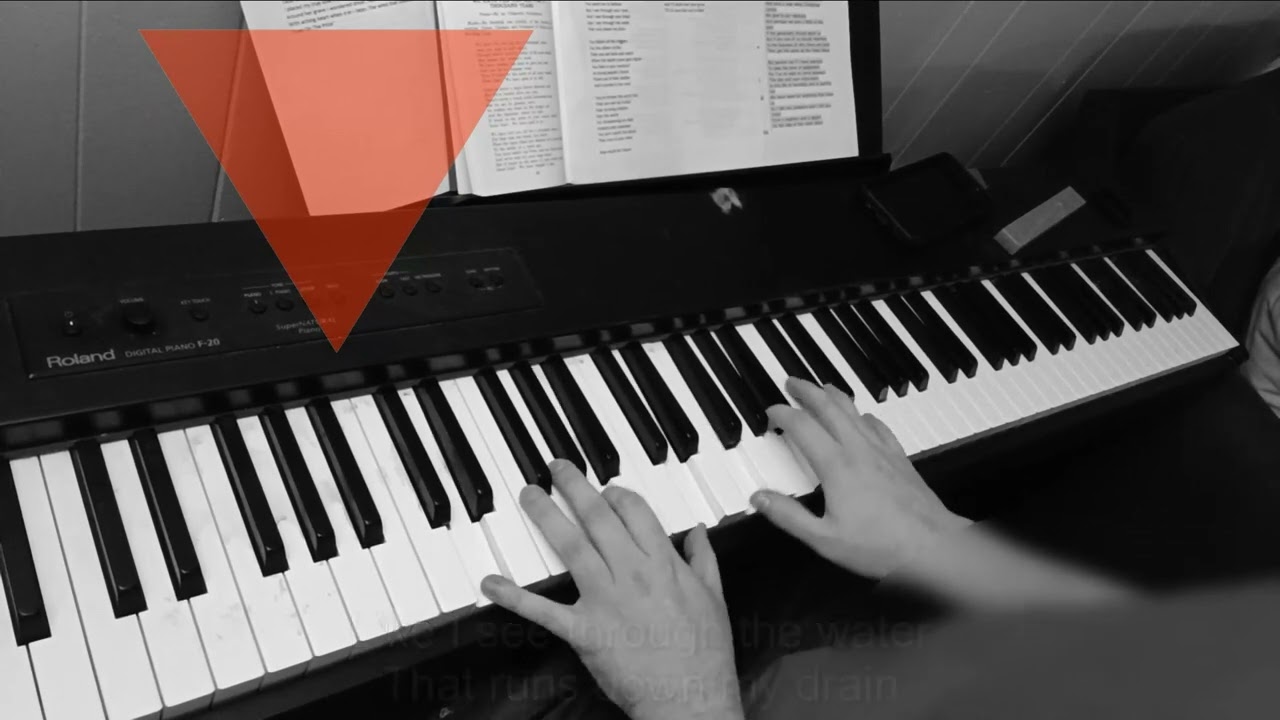
Piano/Vocals: Masters of War
Masters of War is one of Bob Dylan's strongest anti-war songs. It criticizes those who profit from war while others suffer its consequences, making it a powerful statement against violence and military conflict. Decades after its release, the song continues to spark discussion about the human cost of war.
The repetitive harmonic pattern adapts naturally to piano, allowing players to focus on dynamics and emotional intensity. Intermediate pianists can use the piece to develop expressive accompaniment and thoughtful interpretation.
13. Give Peace A Chance - John Lennon
- Artist:John Lennon
- Year:1969
- Difficulty:Beginner
- Best for:Beginners, group performances, and community events
Released during the height of the anti-war movement, Give Peace a Chance quickly became one of the world's best-known peace anthems. Its simple message encouraged people to support peaceful solutions and was sung at rallies and demonstrations across many countries.
The song is ideal for beginner pianists because of its repetitive chord progression and memorable melody. It works equally well as a solo piano piece or as an accompaniment for singers.
14. Imagine - John Lennon
- Artist:John Lennon
- Year:1971
- Difficulty:Beginner
- Best for:Beginners, recitals, weddings, and reflective performances
Although Imaginereaches beyond traditional protest music, its message of peace, unity, and hope has made it one of the most recognized songs in the world. The lyrics encourage listeners to imagine a future without conflict or division, helping the song remain relevant across generations.
Originally composed on the piano, it feels natural to play on the instrument. Its flowing melody and simple accompaniment make it a rewarding piece for anyone learning pianowhile developing expressive playing and musical confidence.
15. Fortunate Son - Creedence Clearwater Revival
- Artist:Creedence Clearwater Revival
- Year:1969
- Difficulty:Intermediate
- Best for:Intermediate players and energetic piano arrangements
Fortunate Son became a defining protest song of the Vietnam War era. Rather than criticizing soldiers, it highlights class inequality by questioning why some people were expected to serve while others avoided the same responsibilities because of wealth or social status.
Its energetic rhythm translates well into piano arrangements. Intermediate players can create exciting performances by emphasizing the driving beat while keeping the melody clear and expressive.
16. Ohio - Crosby, Stills, Nash & Young
- Artist:Crosby, Stills, Nash & Young
- Year:1970
- Difficulty:Intermediate
- Best for:Reflective performances and intermediate pianists
Ohio was written shortly after the Kent State shootings, where four students lost their lives during an anti-war protest in 1970. The song quickly became a symbol of student activism and remains an important reminder of the impact of political conflict on ordinary people.
Its emotional melody adapts beautifully to piano. Intermediate players can focus on expressive phrasing and careful dynamics to capture the song's reflective mood.
17. Universal Soldier - Buffy Sainte-Marie
- Artist:Buffy Sainte-Marie
- Year:1964
- Difficulty:Intermediate
- Best for:Folk music enthusiasts and intermediate solo performances
Universal Soldier explores the idea of personal responsibility during times of war. Rather than placing blame on governments alone, the song encourages listeners to think about the role individuals play in continuing or preventing conflict.
The folk-inspired melody fits naturally on the piano, making it enjoyable to arrange and perform. Intermediate pianists can use expressive dynamics to support the song's thoughtful message.
18. Eve Of Destruction - Barry McGuire
- Artist:Barry McGuire
- Year:1965
- Difficulty:Intermediate
- Best for:Intermediate players and historical music study
Released during the Cold War, Eve of Destruction captured growing concerns about war, political tension, and social unrest. Its bold lyrics reflected the uncertainty many people felt during the 1960s, making it one of the era's most memorable protest songs.
Its strong melody works well on piano even without the original rock arrangement. Intermediate players can create dramatic performances by using dynamic contrasts and expressive timing.
19. War - Edwin Starr
- Artist:Edwin Starr
- Year:1970
- Difficulty:Intermediate
- Best for:Energetic performances and rhythm practice
Few protest songs are as instantly recognizable as War. Best known for its famous opening question, the song delivers a clear anti-war message while emphasizing the human cost of armed conflict. It remains one of the defining peace songs of the 1970s.
On the piano, rhythmic left-hand patterns help recreate the song's driving energy. Intermediate players can develop stronger rhythm and coordination while maintaining the power of the melody.
20. One Tin Soldier - Coven
- Artist:Coven
- Year:1971
- Difficulty:Beginner–Intermediate
- Best for:Beginners progressing to intermediate level and storytelling performances
One Tin Soldier tells a cautionary story about conflict, greed, and the tragic consequences of choosing violence over understanding. Its timeless message encourages peace, compassion, and cooperation, allowing it to remain relevant long after its original release.
The memorable melody makes it enjoyable to learn on piano. Beginner and intermediate players can perform satisfying arrangements while practicing smooth chord changes and expressive phrasing.
Peace Protest Songs To Play On Piano
Peace songs encourage unity, reconciliation, and hope. While many were written during times of conflict, their messages remain relevant today. Most feature memorable melodies that adapt well to expressive piano performances.
21. Redemption Song - Bob Marley
- Artist:Bob Marley
- Year:1980
- Difficulty:Intermediate
- Best for:Solo performances, recitals, and expressive piano playing

REDEMPTION SONG - Bob Marley & The Wailers Piano Tutorial [chords]
Redemption Song is one of Bob Marley's most influential songs, built around themes of freedom, self-liberation, and human dignity. Inspired by Marcus Garvey's message to "emancipate yourselves from mental slavery," the song encourages listeners to overcome oppression and remain hopeful. Its timeless lyrics have made it a global anthem for resilience and human rights.
The song translates beautifully to the piano thanks to its flowing melody and straightforward harmonic structure. Intermediate players can focus on expressive phrasing, balanced accompaniment, and dynamic control to capture its reflective mood.
22. Where Have All The Flowers Gone - Pete Seeger
- Artist:Pete Seeger
- Year:1955
- Difficulty:Beginner
- Best for:Beginners, classrooms, and folk music performances
Where Have All the Flowers Gone is a classic folk protest song that reflects on the repeating cycle of war, loss, and remembrance. Rather than criticizing conflict directly, it encourages listeners to think about the human cost of war through simple but meaningful lyrics. Its message remains relevant decades after it was written.
For beginners, the repetitive chord progression and gentle melody make it easy to learn. The song is ideal for practicing smooth transitions, steady rhythm, and expressive playing without advanced technical demands.
23. If I Had A Hammer - Pete Seeger & Lee Hays
- Artist:Pete Seeger & Lee Hays
- Year:1949
- Difficulty:Beginner
- Best for:Beginner pianists, community performances, and sing-alongs
If I Had a Hammer celebrates justice, equality, peace, and freedom. Originally written for the labor movement, it later became closely associated with the Civil Rights Movement as artists like Peter, Paul and Mary helped introduce it to a wider audience. Its optimistic message continues to inspire audiences around the world.
The simple rhythm and familiar melody make it an enjoyable song for beginner pianists. Because the technical demands are low, players can concentrate on musical expression and confident chord changes.
24. Last Night I Had The Strangest Dream - Ed McCurdy
- Artist:Ed McCurdy
- Year:1950
- Difficulty:Beginner
- Best for:Beginners, peaceful recitals, and reflective performances
Last Night I Had the Strangest Dream imagines a future where nations choose peace instead of war. The song became popular during peace movements because of its hopeful message and gentle storytelling, encouraging listeners to believe that lasting peace is possible.
Its calm melody and simple accompaniment make it well suited to beginner piano players. Gentle phrasing and controlled dynamics help bring out the song's thoughtful and reflective character.
25. Heal The World - Michael Jackson
- Artist:Michael Jackson
- Year:1991
- Difficulty:Intermediate
- Best for:School performances, recitals, and inspirational piano pieces
Michael Jackson - How to play 'Heal The World' on the piano -- Playground Sessions
Although Heal the World is not a traditional protest song, its message of compassion, kindness, and global peace has made it an important song for humanitarian causes. It encourages listeners to care for one another and work toward creating a better future for everyone.
The lyrical melody translates naturally to piano and allows intermediate players to develop expressive phrasing. Smooth chord progressions and balanced dynamics help create an emotional solo performance.
26. One - U2
- Artist:U2
- Year:1991
- Difficulty:Intermediate
- Best for:Intermediate recitals and expressive solo performances
One is often interpreted as a song about unity, forgiveness, and reconciliation. While its lyrics have different meanings for different listeners, its message of understanding and human connection has allowed it to become a powerful anthem performed at many charitable and social events.
Its rich harmonies make it especially rewarding on piano. Intermediate players can explore expressive voicing, sustained chords, and careful use of dynamics to highlight the song's emotional depth.
27. People Have The Power - Patti Smith
- Artist:Patti Smith
- Year:1988
- Difficulty:Intermediate
- Best for:Community performances, recitals, and inspirational programs
People Have the Power celebrates the belief that ordinary people can create meaningful social change when they work together. Its uplifting message has made it a popular song at rallies, public events, and performances focused on hope and unity.
The inspiring melody adapts well to piano, whether performed as a solo instrumental or to accompany a singer. Intermediate players can focus on expressive dynamics while maintaining a strong, confident rhythm.
28. Imagine That - LL Cool J
- Artist:LL Cool J
- Year:2008
- Difficulty:Advanced
- Best for:Advanced pianists and contemporary piano arrangements
Imagine That encourages listeners to think about inequality, opportunity, and the importance of hope. Through thoughtful lyrics, LL Cool J reflects on social challenges while encouraging positive change and personal responsibility.
For pianists, creative arrangements can emphasize the song's reflective atmosphere. Advanced players can experiment with modern harmonies, rhythmic patterns, and expressive interpretation to create an engaging performance.
29. We Are The World - USA For Africa
- Artist:USA for Africa
- Year:1985
- Difficulty:Intermediate
- Best for:Community concerts, school performances, and group recitals
USA for Africa - We Are The World | EASY Piano Tutorial
Written to support humanitarian relief efforts in Africa, We Are the World became one of the most recognizable charity songs in music history. Its message of compassion, unity, and shared responsibility continues to inspire audiences around the globe.
The memorable chorus and flowing melody adapt naturally to piano. Intermediate players can create a warm and expressive performance while developing smooth accompaniment and balanced dynamics.
30. Let There Be Peace On Earth
- Artist:Jill Jackson-Miller & Sy Miller
- Year:1955
- Difficulty:Beginner
- Best for:Beginners, schools, churches, and community gatherings
Let There Be Peace on Earth is a beloved peace anthem often performed at schools, community events, and religious services. Its simple message encourages kindness, understanding, and the belief that lasting peace begins with each individual.
The straightforward harmony and memorable melody make it an excellent beginner piano piece. New players can build confidence while practicing smooth chord changes, steady rhythm, and expressive phrasing.
Labor Movement Songs
These songs gave workers a voice during campaigns for fair wages, safer conditions, and equal treatment. Their folk roots often make them excellent piano pieces.
31. This Land Is Your Land - Woody Guthrie
- Artist:Woody Guthrie
- Year:1940
- Difficulty:Beginner
- Best for:Beginners, classrooms, community performances, and folk music enthusiasts
This Land Is Your Land is often seen as a patriotic American folk song, but it also carries a message about equality, fairness, and shared opportunity. Woody Guthrie wrote it to remind listeners that the country's resources and opportunities should belong to everyone, making it an enduring song of hope and inclusion.
Its simple melody and easy chord progression make it one of the most approachable folk songs for beginner pianists. Players can focus on maintaining a steady rhythm while developing confidence with basic accompaniment patterns.
32. Solidarity Forever
- Artist:Traditional (lyrics by Ralph Chaplin)
- Year:1915
- Difficulty:Beginner
- Best for:Beginners, educational settings, and community performances

"Solidarity Forever" - American Workers Song [LYRICS]
Solidarity Forever is one of the best-known labor movement songs in history. Written to support workers' rights and labor unions, it emphasizes the importance of unity, cooperation, and collective action in improving working conditions. Its message continues to resonate wherever workers organize for fairness and dignity.
The song's march-like rhythm makes it engaging to perform on piano. Beginner players can learn it quickly while practicing steady timing and clear chord changes.
33. Which Side Are You On? - Florence Reece
- Artist:Florence Reece
- Year:1931
- Difficulty:Beginner
- Best for:Beginners, folk music performances, and history lessons
Which Side Are You On? was written during the Harlan County coal miners' strike in Kentucky. Florence Reece composed the song after union organizers faced violence and intimidation, creating a powerful anthem that continues to symbolize workers' rights and standing up for justice.
Its straightforward melody makes it easy to arrange for piano. Beginners can focus on expressive playing while becoming familiar with traditional folk accompaniment.
34. Bread And Roses
- Artist:Traditional (lyrics by James Oppenheim)
- Year:1911 (popularized after the 1912 textile strike)
- Difficulty:Intermediate
- Best for:Intermediate recitals and expressive solo performances
Bread and Roses was inspired by the 1912 Lawrence textile workers' strike in Massachusetts. The song reminds listeners that people deserve not only fair wages but also dignity, respect, education, and a better quality of life. It remains an important anthem in discussions about workers' rights and equality.
Its lyrical melody is well suited to piano. Intermediate players can use expressive dynamics and careful phrasing to bring out the song's hopeful and reflective character.
35. Joe Hill - Joan Baez
- Artist:Joan Baez
- Year:1969 (popularized by Joan Baez)
- Difficulty:Intermediate
- Best for:Intermediate players, folk recitals, and historical performances
Joe Hill honors the life of labor activist Joe Hill, whose dedication to workers' rights made him a lasting symbol of the labor movement. The song reflects on his legacy and reminds listeners that the pursuit of justice continues through those who carry his message forward.
Its storytelling style adapts beautifully to solo piano. Intermediate pianists can emphasize the melody while using expressive phrasing to support the song's emotional narrative.
36. Talking Union - Almanac Singers
- Artist:Almanac Singers
- Year:1941
- Difficulty:Beginner
- Best for:Beginners, classrooms, and folk music practice
Talking Union encouraged workers to organize peacefully and understand the benefits of collective action. Written in a conversational style, the song explains labor organizing in a friendly and accessible way, making it one of the most recognizable songs of the labor movement.
The simple accompaniment works well on piano and supports the song's relaxed rhythm. Beginner players can practice steady timing while learning basic folk-style accompaniment.
37. Union Maid - Woody Guthrie
- Artist:Woody Guthrie
- Year:1940
- Difficulty:Beginner
- Best for:Beginners, community performances, and folk music lovers
Union Maid celebrates the important role women have played in labor movements. Written by Woody Guthrie, the song encourages courage, determination, and active participation in the fight for fair working conditions, making it an enduring symbol of equality within the labor movement.
Its lively folk rhythm and simple melody make it enjoyable for beginner pianists. The easy chord progression allows players to focus on rhythm, confidence, and musical expression.
38. The Internationale
- Artist:Pierre De Geyter (music), Eugène Pottier (lyrics)
- Year:1888
- Difficulty:Intermediate
- Best for:Intermediate pianists, historical performances, and dramatic solo arrangements
The Internationale is one of the world's most recognized labor movement songs. For more than a century, it has been sung by workers and social movements calling for equality, solidarity, and social justice across many countries.
Its stately melody translates effectively to piano and creates a bold instrumental performance. Intermediate players can use strong dynamics and balanced chord voicing to capture the song's powerful and uplifting character.
Women's Rights Protest Songs
These songs highlight equality, independence, and the ongoing pursuit of women's rights.
39. Respect - Aretha Franklin
- Artist:Aretha Franklin
- Year:1967
- Difficulty:Intermediate
- Best for:Soul-inspired performances, recitals, and expressive piano playing
Respect - Aretha Franklin - PIANO TUTORIAL (Part 1)
Respect became one of the defining songs of the women's rights movement and the broader fight for equality. Although originally written by Otis Redding, Aretha Franklin transformed it into a powerful anthem demanding dignity, independence, and equal treatment. Its influence extends far beyond music, making it one of the most important songs in popular culture.
On the piano, the song's soulful melody and energetic rhythm create an engaging performance. Intermediate players can explore expressive phrasing, syncopated rhythms, and dynamic contrasts while capturing the confidence and strength that define the song.
40. I Am Woman - Helen Reddy
- Artist:Helen Reddy
- Year:1972
- Difficulty:Beginner-Intermediate
- Best for:School performances, recitals, and inspirational piano pieces
I Am Woman became one of the signature songs of the women's movement during the 1970s. Its lyrics celebrate confidence, resilience, and empowerment, inspiring generations of listeners to embrace equality and self-belief. The song remains a lasting symbol of women's rights and social progress.
Its memorable melody adapts naturally to the piano, making it suitable for beginner and intermediate players. The arrangement relies more on expressive playing than technical difficulty, allowing pianists to focus on dynamics and musical interpretation.
Environmental Protest Songs
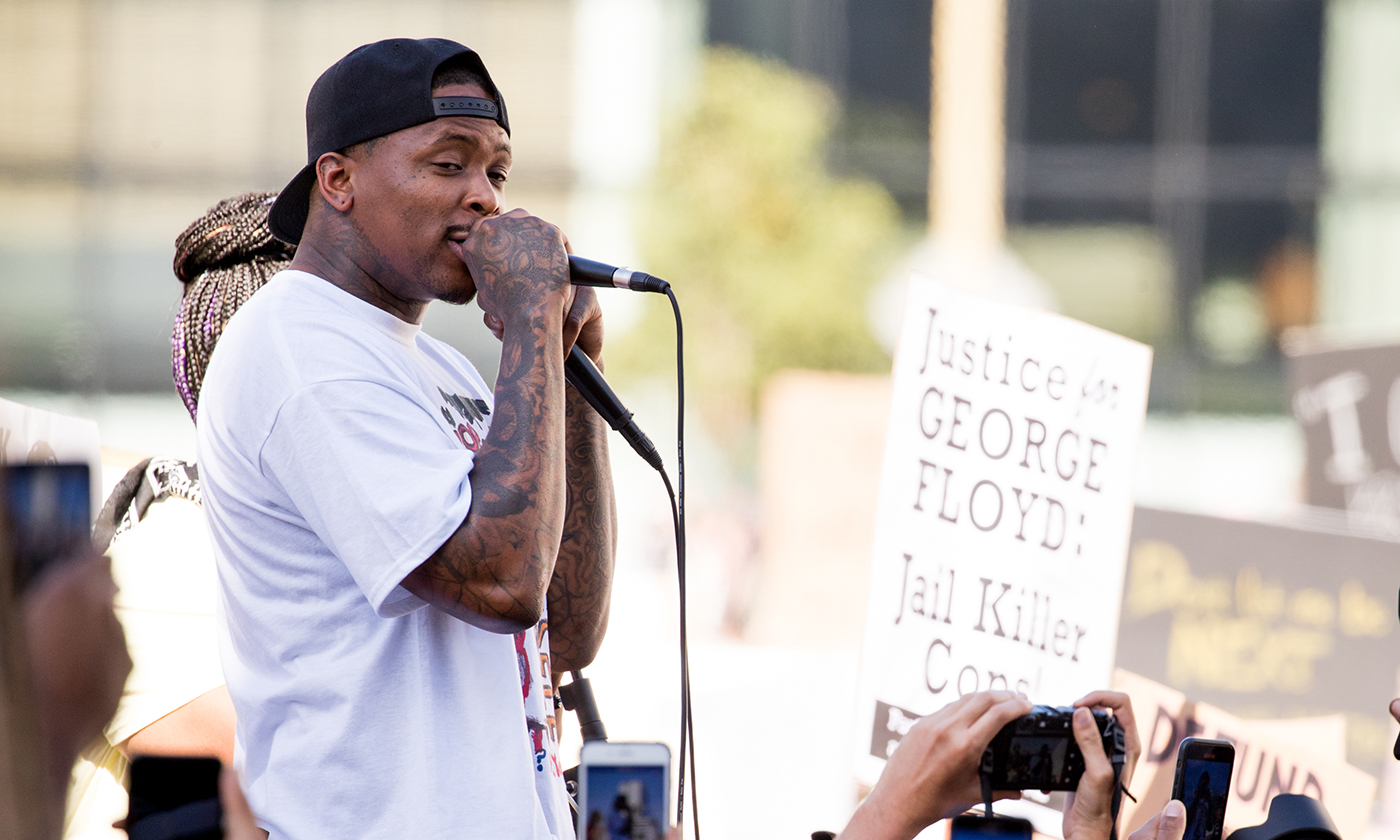
Environmental protest songs raise awareness about conservation, climate change, pollution, and humanity's relationship with nature. While not all were written as traditional protest anthems, their messages have inspired environmental movements around the world.
41. Big Yellow Taxi - Joni Mitchell
- Artist:Joni Mitchell
- Year:1970
- Difficulty:Intermediate
- Best for:Intermediate recitals, folk-pop performances, and environmental-themed programs
Big Yellow Taxi is one of the best-known songs about environmental conservation. Its famous lyric, "They paved paradise and put up a parking lot," has become a lasting reminder of the impact of urban development and the importance of protecting natural spaces. The song continues to resonate with audiences concerned about sustainability and responsible growth.
Its catchy melody adapts well to the piano, allowing intermediate players to create lively and rhythmic arrangements. The piece also provides good practice for maintaining a steady groove while highlighting the melody.
42. Mercy Mercy Me (The Ecology) - Marvin Gaye
- Artist:Marvin Gaye
- Year:1971
- Difficulty:Intermediate
- Best for:Soul-inspired performances and expressive solo piano
Released on Marvin Gaye's landmark album What's Going On, Mercy Mercy Me (The Ecology) was one of the first mainstream songs to focus on pollution, environmental damage, and the need to care for the planet. Its thoughtful lyrics encouraged listeners to reflect on humanity's relationship with nature long before environmental issues became part of everyday public discussion.
The song's jazz-inspired harmonies and soulful melody translate beautifully to piano. Intermediate pianists can develop expressive voicing, smooth chord transitions, and dynamic control while capturing its reflective mood.
43. Earth Song - Michael Jackson
- Artist:Michael Jackson
- Year:1995
- Difficulty:Intermediate-Advanced
- Best for:Concert performances, recitals, and expressive piano arrangements
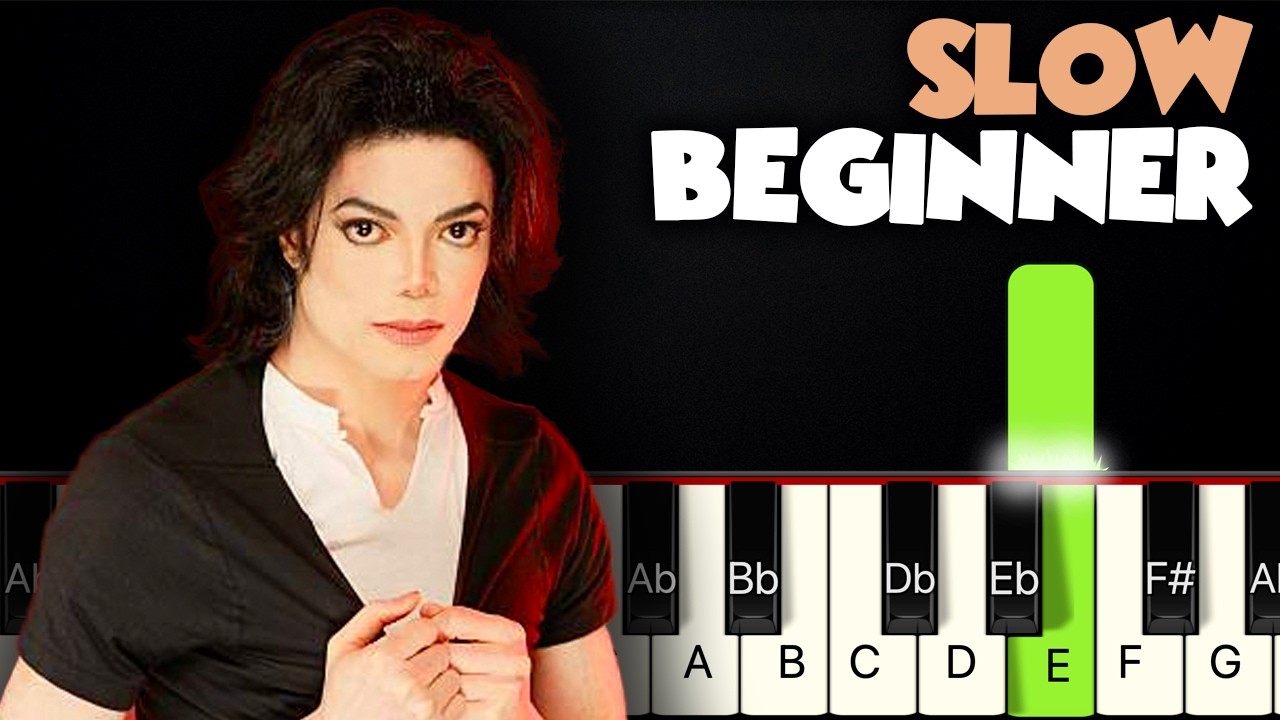
How to play on piano EARTH SONG by Michael Jackson | SLOW BEGINNER
Earth Song is a powerful appeal for environmental protection, peace, and compassion. Through emotional lyrics and dramatic musical contrasts, Michael Jackson draws attention to issues such as deforestation, conflict, and humanity's responsibility to care for the world. It remains one of his most socially conscious works.
On the piano, the song offers an emotionally rewarding challenge. Its wide dynamic range, expressive melody, and dramatic build-up allow intermediate and advanced players to showcase musical interpretation as well as technical control.
44. After The Gold Rush - Neil Young
- Artist:Neil Young
- Year:1970
- Difficulty:Intermediate
- Best for:Intermediate pianists and reflective solo performances
Although After the Gold Rush has been interpreted in different ways, many listeners associate it with environmental awareness and concerns about humanity's future. Its poetic lyrics invite reflection, making it one of Neil Young's most enduring and thought-provoking songs.
Because the original version is built around the piano, it feels especially natural to perform as a solo piece. Intermediate players can focus on expressive phrasing, balanced accompaniment, and gentle dynamics to preserve the song's reflective atmosphere.
45. Don't Go Near The Water - The Beach Boys
- Artist:The Beach Boys
- Year:1971
- Difficulty:Intermediate
- Best for:Intermediate recitals and environmental-themed performances
Don't Go Near the Water highlights the growing problem of water pollution and encourages greater environmental responsibility. Released at a time when public awareness of conservation was increasing, the song reminds listeners of the importance of protecting natural resources for future generations.
Its gentle melody and flowing harmony adapt well to lyrical piano arrangements. Intermediate pianists can use expressive dynamics and smooth chord voicing to create a calm, thoughtful performance that reflects the song's message.
Modern Protest Songs
Modern artists continue using music to address inequality, justice, identity, and social change. These songs introduce contemporary voices while remaining suitable for thoughtful piano interpretations.
46. Alright - Kendrick Lamar
- Artist:Kendrick Lamar
- Year:2015
- Difficulty:Advanced
- Best for:Advanced pianists, contemporary recitals, and expressive solo arrangements
Alright became a modern anthem of resilience and hope. Released on Kendrick Lamar's critically acclaimed album To Pimp a Butterfly, the song gained widespread recognition during conversations about racial justice, with its uplifting chorus becoming a symbol of perseverance during peaceful demonstrations.
Although originally built around hip-hop production, its memorable melodic ideas adapt well to piano. Advanced players can create expressive arrangements by combining rich harmonies, rhythmic variations, and thoughtful dynamics.
47. Glory - Common & John Legend
- Artist:Common & John Legend
- Year:2014
- Difficulty:Intermediate
- Best for:Recitals, school performances, and inspirational piano pieces

How To Play "GLORY" By John Legend Feat. Common | Piano Tutorial (R&B Soul)
Written for the film Selma, Glory connects the Civil Rights Movement of the 1960s with ongoing conversations about equality and justice. The song received widespread acclaim for honoring the sacrifices of earlier generations while encouraging continued progress toward equal rights.
Its emotional chord progression and memorable melody translate naturally to piano. Intermediate players can focus on expressive phrasing and dynamic control to create an inspiring solo performance.
48. Freedom - Beyoncé Featuring Kendrick Lamar
- Artist:Beyoncé featuring Kendrick Lamar
- Year:2016
- Difficulty:Advanced
- Best for:Advanced solo performances and contemporary piano arrangements
Freedom explores perseverance, identity, and resilience in the face of injustice. Combining gospel, soul, and hip-hop influences, the song encourages strength and determination while celebrating the ability to overcome challenges.
Its powerful rhythmic foundation can be adapted into dramatic piano arrangements. Advanced pianists can experiment with syncopated accompaniment, layered harmonies, and dynamic contrasts to recreate its emotional intensity.
49. Same Love - Macklemore & Ryan Lewis Featuring Mary Lambert
- Artist:Macklemore & Ryan Lewis featuring Mary Lambert
- Year:2012
- Difficulty:Intermediate
- Best for:School performances, recitals, and contemporary piano repertoire
Same Love promotes equality, acceptance, and respect while challenging discrimination based on sexual orientation. The song became an important cultural statement supporting inclusion and encouraging conversations about equal rights.
The chorus adapts especially well to piano because of its lyrical melody and expressive harmony. Intermediate players can create a warm, emotional performance while practicing smooth chord transitions and balanced accompaniment.
50. Born This Way - Lady Gaga
- Artist:Lady Gaga
- Year:2011
- Difficulty:Intermediate
- Best for:Inspirational performances and intermediate pianists
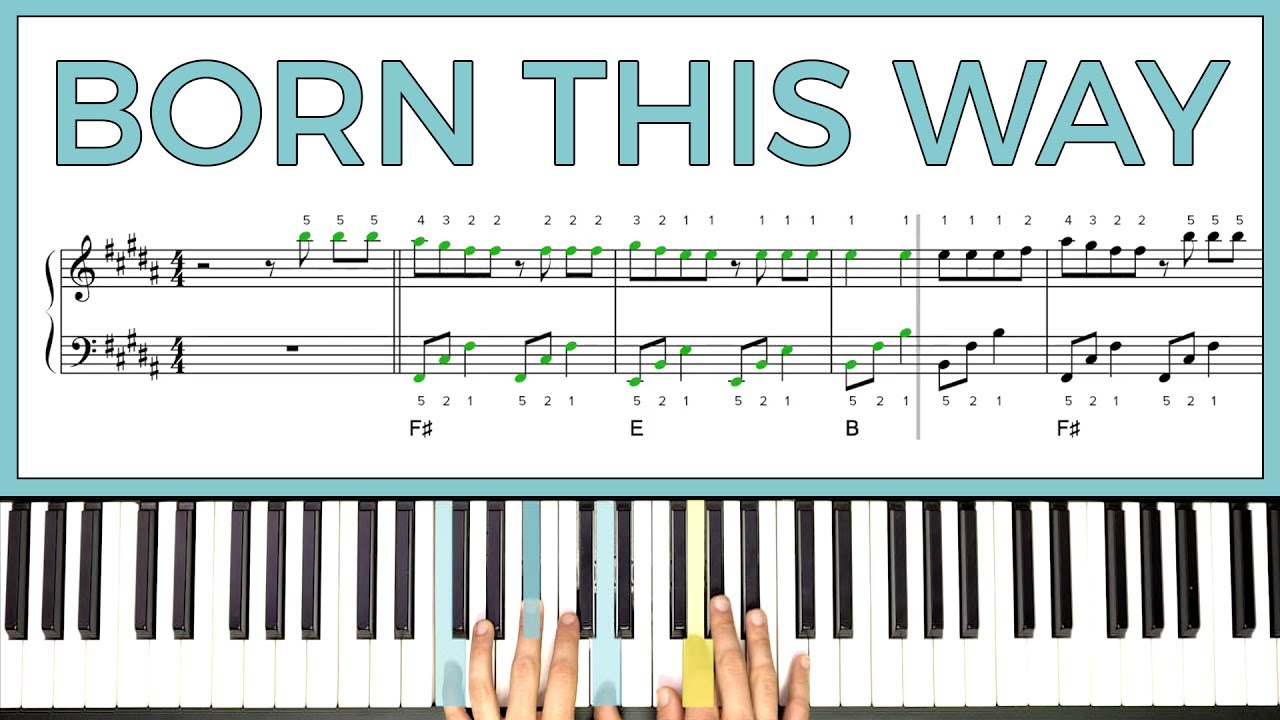
How to play 'Born This Way' by Lady Gaga on the piano -- Playground Sessions
Born This Way celebrates individuality, self-acceptance, and inclusion. Its positive message encourages listeners to embrace who they are, making it an enduring anthem for confidence and equality.
The uplifting melody works beautifully in simplified piano arrangements. Intermediate players can focus on expressive playing while maintaining the song's energetic and optimistic character.
51. Praying - Kesha
- Artist:Kesha
- Year:2017
- Difficulty:Intermediate
- Best for:Emotional recitals and expressive solo performances
Praying is a powerful song about healing, resilience, and finding strength after adversity. Rather than focusing on anger, it emphasizes forgiveness, personal growth, and hope, allowing many listeners to connect with its emotional message.
Its expressive melody translates naturally to piano, giving intermediate players opportunities to develop dynamic control, lyrical phrasing, and emotional interpretation.
52. This Is America - Childish Gambino
- Artist:Childish Gambino
- Year:2018
- Difficulty:Advanced
- Best for:Advanced contemporary piano arrangements
This Is America examines themes of violence, race, and media through powerful symbolism and contrasting musical styles. Its layered composition encourages listeners to think deeply about modern society and the issues presented in the song.
Because the original arrangement relies heavily on rhythm and production, advanced pianists can creatively reinterpret it through changing textures, syncopated rhythms, and modern harmonic ideas.
53. Formation - Beyoncé
- Artist:Beyoncé
- Year:2016
- Difficulty:Advanced
- Best for:Advanced pianists and contemporary recitals

🎹 How to play "FORMATION" by Beyonce (easy piano tutorial lesson)
Formation celebrates identity, heritage, confidence, and empowerment. Its bold message and distinctive style have made it an important song in conversations about culture, representation, and self-expression.
On the piano, its rhythmic motifs can be transformed into engaging solo arrangements. Advanced players can explore creative accompaniment patterns while preserving the song's strong sense of rhythm.
54. Fight The Power - Public Enemy
- Artist:Public Enemy
- Year:1989
- Difficulty:Advanced
- Best for:Advanced jazz-inspired arrangements and contemporary performances
Fight the Power is widely regarded as one of hip-hop's defining protest songs. It challenges injustice, encourages critical thinking, and remains an influential work in discussions about equality, civil rights, and social change.
Creative piano arrangements often use jazz-inspired reharmonization to highlight the song's strong melodic ideas. Advanced pianists can experiment with complex chords and rhythmic variation to create a fresh interpretation.
55. American Idiot - Green Day
- Artist:Green Day
- Year:2004
- Difficulty:Intermediate–Advanced
- Best for:Contemporary recitals and energetic piano performances
American Idiot critiques media influence, political culture, and public opinion during the early 2000s. Its energetic style and memorable chorus helped make it one of the defining protest songs of modern rock music.
The driving melody adapts surprisingly well to piano. Intermediate and advanced players can create exciting arrangements by balancing energetic rhythms with clear melodic lines.
56. Zombie - The Cranberries
- Artist:The Cranberries
- Year:1994
- Difficulty:Intermediate
- Best for:Reflective performances and expressive solo piano

The Cranberries - Zombie | Piano Cover by Pianella Piano
Zombie was written in response to the violence surrounding the conflict in Northern Ireland. Rather than celebrating conflict, the song reflects on its tragic human cost and calls attention to the suffering caused by violence.
Its haunting melody translates beautifully to solo piano. Intermediate pianists can focus on expressive dynamics and sustained phrasing to preserve the song's emotional depth.
57. Sunday Bloody Sunday - U2
- Artist:U2
- Year:1983
- Difficulty:Advanced
- Best for:Advanced recitals and dramatic piano arrangements
Sunday Bloody Sunday addresses the tragedy of violence while calling for peace, understanding, and reconciliation. Although inspired by events in Northern Ireland, its message against violence has given the song universal significance.
Its powerful chord progression and emotional intensity work exceptionally well on piano. Advanced players can create dramatic performances through dynamic contrasts and expressive interpretation.
58. Revolution - The Beatles
- Artist:The Beatles
- Year:1968
- Difficulty:Intermediate
- Best for:Intermediate pianists and classic rock arrangements
Revolution explores different viewpoints on political and social change during a period of global protest. Rather than promoting one solution, the song encourages listeners to think critically about how meaningful change should be achieved.
Its memorable melody adapts well to both simple and more advanced piano arrangements. Intermediate players can perform satisfying versions while gradually adding richer harmonies.
59. Get Up, Stand Up - Bob Marley & Peter Tosh
- Artist:Bob Marley & Peter Tosh
- Year:1973
- Difficulty:Intermediate
- Best for:Reggae-inspired performances and expressive piano playing
Get Up, Stand Up encourages people to defend their rights and dignity while remaining hopeful and determined. Its empowering message has made it one of Bob Marley's most influential songs and a lasting anthem for justice and equality.
Its memorable rhythm translates effectively to piano through steady accompaniment and expressive melody. Intermediate players can create engaging performances while exploring reggae-inspired rhythmic patterns.
60. Blowin' In The Wind (Advanced Concert Arrangement)
- Artist:Bob Dylan
- Year:Based on the 1963 original
- Difficulty:Advanced
- Best for:Concert recitals, advanced pianists, and expressive solo performances
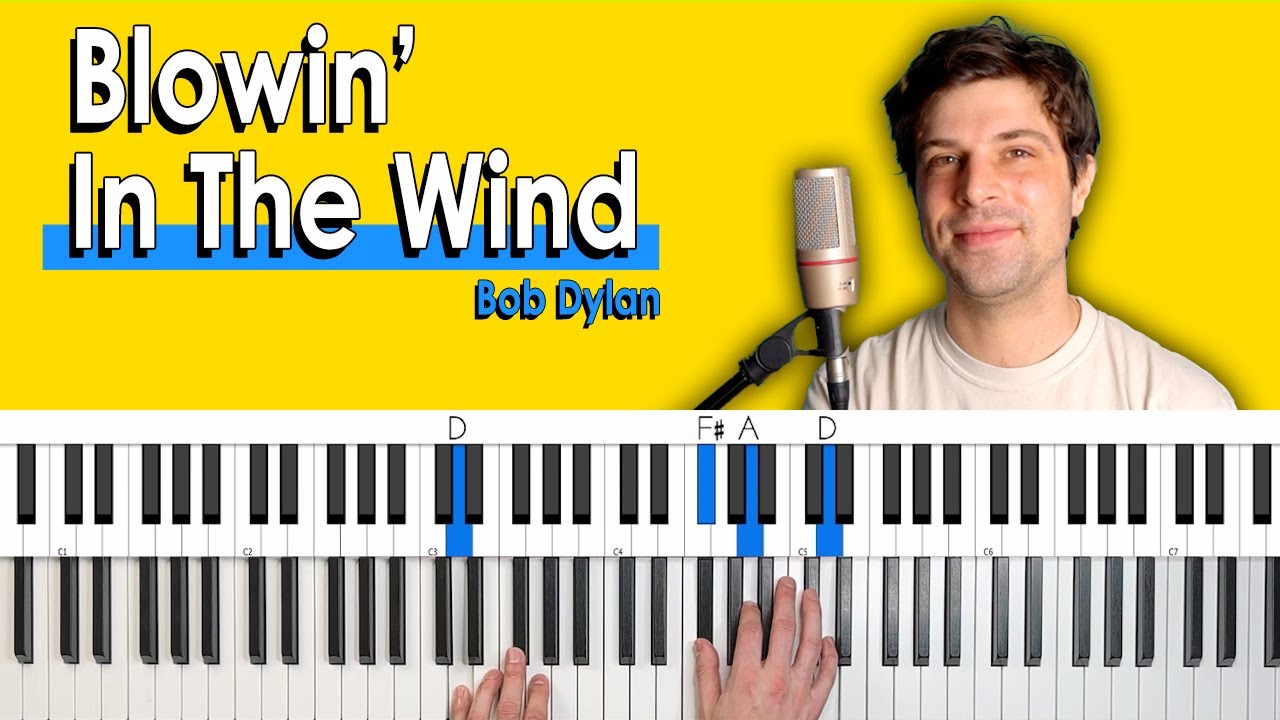
How To Play "Blowin' In The Wind" by Bob Dylan [Piano Tutorial + Chord Chart]
Returning to Blowin' in the Windwith an advanced concert arrangement allows experienced pianists to present one of history's most influential protest songs in a fresh and sophisticated way. Richer harmonies and expanded textures add new depth while preserving the timeless message of peace, freedom, and humanity.
This approach transforms a simple folk melody into a compelling recital piece. Advanced players can improve their piano skillsthrough expressive phrasing, dynamic control, and creative interpretation while honoring the spirit of the original composition.
Easiest Protest Songs For Beginners
If you're new to piano, start with songs that use familiar chord progressions and singable melodies.
| Skill Level | Recommended Songs |
| Beginner | We Shall Overcome, Blowin' in the Wind, Imagine, Give Peace a Chance, This Land Is Your Land, Keep Your Eyes on the Prize, Where Have All the Flowers Gone, Solidarity Forever |
| Intermediate | A Change Is Gonna Come, What's Going On, Redemption Song, Respect, Big Yellow Taxi, People Have the Power |
| Advanced | Strange Fruit, Mississippi Goddam, Sunday Bloody Sunday, Alright, This Is America, Masters of War |
These songs let you build confidence while gradually introducing more expressive phrasing and richer harmonies.
Best Intermediate Piano Protest Songs
Once you're comfortable with basic chords and melody, these pieces offer rewarding musical challenges:
- A Change Is Gonna Come
- Redemption Song
- Respect
- Glory
- Mercy Mercy Me
- Big Yellow Taxi
- Revolution
- What's Going On
- People Get Ready
- Earth Song
Many of these songs feature richer harmony, dynamic contrast, and opportunities to develop expressive playing.
Advanced Piano Arrangements Worth Learning
Advanced players often enjoy transforming well-known songs into concert-style arrangements.
Some excellent choices include:
- Strange Fruit
- Mississippi Goddam
- Sunday Bloody Sunday
- Alright
- This Is America
- Earth Song
- Masters of War
- Blowin' in the Wind (concert arrangement)
Adding extended chords, countermelodies, and varied textures can turn these familiar songs into memorable recital performances.
Tips For Performing Protest Songs On Piano
A meaningful performance depends on more than technical accuracy. Understanding each song's history helps you communicate its emotional message with greater authenticity.
Performance Checklist
- Learn the historical background before practicing.
- Keep the melody clear and expressive.
- Avoid rushing reflective songs.
- Use dynamics to highlight emotional contrasts.
- Match your tempo to the song's message.
- If performing publicly, briefly introduce the song's historical significance.
- Choose an arrangement that matches your technical ability.
People Also Ask
What Is The Most Famous Protest Song?
Many music historians consider Blowin' in the Wind by Bob Dylan one of the most influential protest songs ever written because of its lasting impact on peace and civil rights movements.
Are Protest Songs Good For Piano?
Yes. Many protest songs feature memorable melodies and straightforward chord progressions that adapt naturally to solo piano.
Which Protest Songs Are Easiest To Learn?
Beginner-friendly choices include Imagine, We Shall Overcome, Blowin' in the Wind, Give Peace a Chance, and This Land Is Your Land.
Do Protest Songs Still Matter Today?
Yes. Contemporary artists continue writing songs that address social issues, equality, environmental concerns, and human rights, showing that protest music remains an important form of artistic expression.
Final Thoughts
Learning protest songs to play on piano is about more than mastering melodies; it's a chance to connect with music that has inspired change, challenged injustice, and brought people together. From timeless classics like Blowin' in the Wind to modern anthems, each song offers both musical and historical value.
Choose pieces that match your skill level, play them with understanding and expression, and you'll build a repertoire that is as meaningful as it is enjoyable.