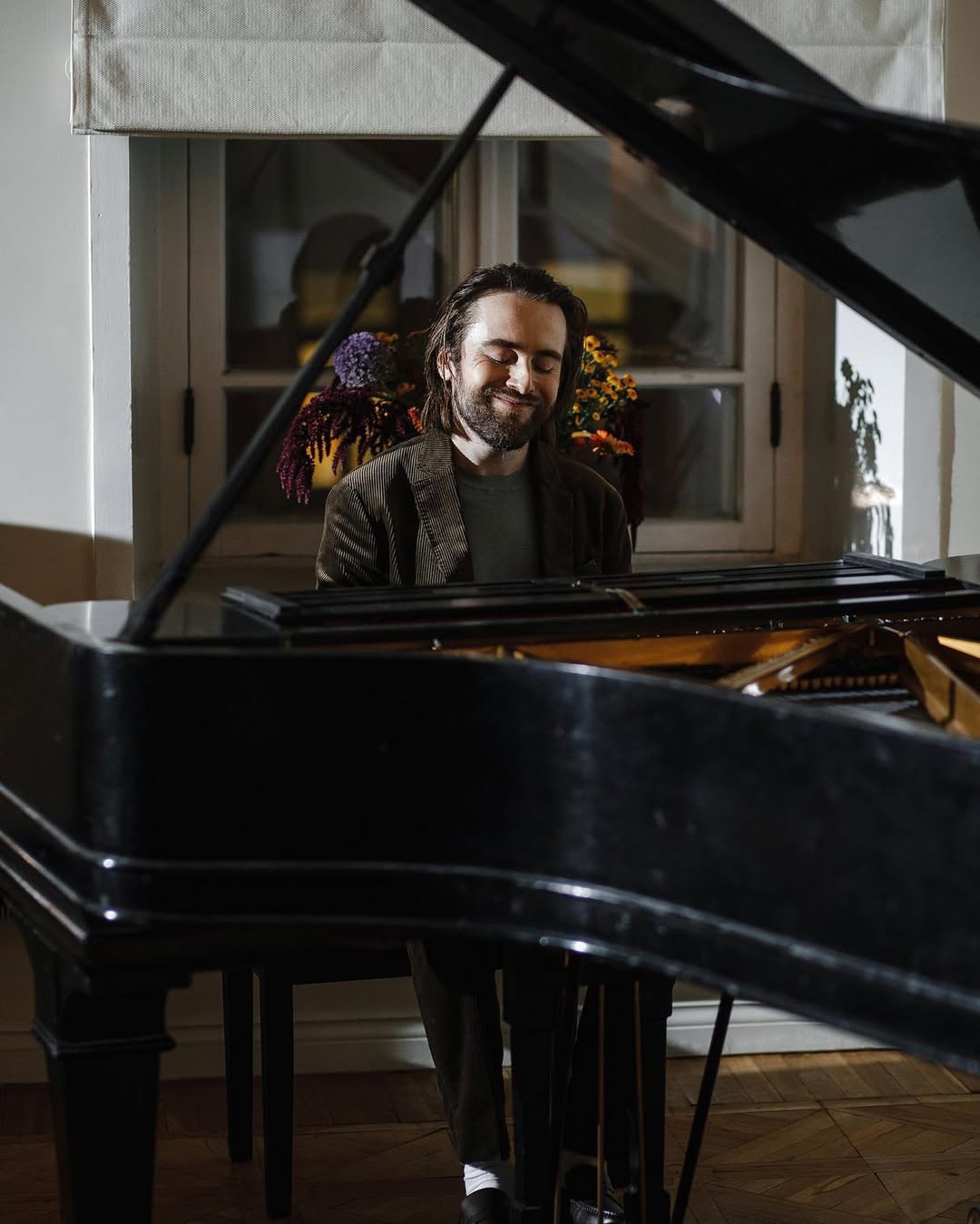
Daniil Olegovich Trifonov was born on 5 March 1991 in Nizhny Novgorod, Russia. He was raised as the only child of a highly musical family: his father was a composer and his mother taught music theory. Trifonov grew up in a home surrounded by music; this early environment fostered his interest in the piano and in composition. He began taking piano lessons at age five and, according to interviews, he also started writing his own music around that same age.
When Trifonov was about eight years old, his parents moved the family to Moscow so he could attend the prestigious Gnessin School of Music. At the Gnessin School (a specialized music boarding school for gifted children), he studied piano under the renowned teacher Tatiana Zelikmanand pursued formal composition studies alongside his keyboard training. Under Zelikman’s guidance Trifonov received intensive training; he remained at Gnessin through his late teens, developing a solid musical and academic foundation during those years.
Career Beginnings
Daniil Trifonovfirst gained attention in the classical world through major competition wins while still a teenager. In the 2010–11 season he earned top prizes at three of the most prestigious piano contests: he took Third Prize at the Warsaw Chopin Competition (2010), First Prize at the Arthur RubinsteinCompetition in Tel Aviv (May 2011), and First Prize plus Grand Prix at the International Tchaikovsky Competition in Moscow (2011).
These victories propelled him onto the concert stage internationally. At the same time, Trifonov pursued composition: he has written works for solo piano, chamber ensemble, and orchestra. His own Piano Concerto (premiered in 2014) was hailed by reviewers for its artistry.
For example, the Cleveland Plain Dealer raved of the premiere, “Even having seen it, one cannot quite believe it… Such is the artistry of pianist-composer Daniil Trifonov”. This mix of virtuoso performance and original composition set the foundation for his professional career.
International Breakthrough
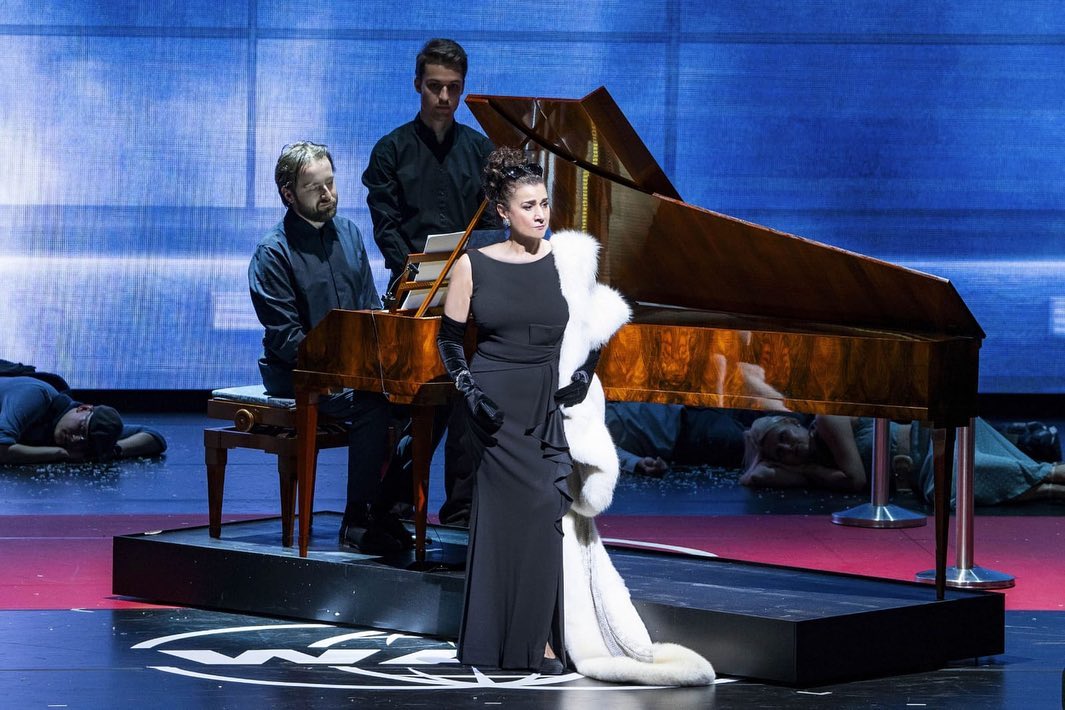
The competition wins of 2011 opened global doors for Trifonov, and by 2012–2013 he was debuting at the world’s great recital halls. He made major solo recital debuts at venues like Carnegie Hall (New York), London’s Wigmore Hall, Vienna’s Musikverein, Japan’s Suntory Hall and Paris’s Salle Pleyel in 2012–13.
Critics and audiences took notice of his extraordinary combination of technique and musicality. Around the same time, Trifonov signed an exclusive recording contract with Deutsche Grammophon.
His first album for DG was the live recording of his 2013 Carnegie Hall recital, which captured his sold-out debut there (and earned him a Grammy nomination). These recital appearances and recordings cemented his reputation and launched his career on the international concert circuit.
Major Performances & Concert Highlights
Trifonov soon became a fixture at top festivals and concert series worldwide. He has given recitals at distinguished venues and festivals including the Lucerne Piano Festival, Paris’s Théâtre des Champs-Élysées (Auditorium du Louvre), Brussels’s Palais des Beaux-Arts, Barcelona’s Palau de la Música, Tokyo Opera City, the Seoul Arts Center and Melbourne Recital Centre.
In the United States he has appeared in solo and chamber programs at Carnegie Hall (multiple seasons) and Washington’s Kennedy Center. As a concerto soloist, Trifonov has headlined on high-profile occasions: for instance, he was invited to play Tchaikovsky’s Piano Concerto No.1 under Riccardo Muti at the Chicago Symphony’s gala for its 125th anniversary.
He also took center stage at the Berlin Philharmonic’s New Year’s Eve concert under Sir Simon Rattle. In the 2019–20 season Trifonov was named Artist-in-Residence of the New York Philharmonic, a season-long role that included the New York premiere of his own Piano Quintet with the orchestra.
He has also premiered new works by other composers; notably, he gave the world premiere of Mason Bates’s piano concerto with the Philadelphia Orchestra and later with the San Francisco Symphony. Across these engagements Trifonov has showcased a broad Romantic repertoire (Beethoven, Schumann, Rachmaninoff, Brahms, etc.), often touring Europe and North America in multi-concert cycles.
Recordings & Discography
| Album | Details |
| The Carnegie Recital (2014) | Live debut Carnegie Hall recital; Grammy-nominated |
| Transcendental (2016) | Liszt Transcendental Études; Grammy winner |
| Chopin Evocations (2017) | Chopin works and related repertoire |
| Destination Rachmaninoff (2018–2020) | Complete piano concertos & Paganini Rhapsody |
| Silver Age (2020) | Russian piano works; Opus Klassik award |
| Bach: The Art of Life (2021) | Solo Bach piano repertoire |
| My American Story – North (2024) | American piano works & concertos |
| Tchaikovsky (2025) | Solo piano works by Tchaikovsky |
Trifonov is an exclusive artist for Deutsche Grammophon and has built an extensive discography of solo and concerto recordings. His albums include landmark releases in both solo and orchestral repertoire.
Early on he recorded “The Carnegie Recital” (2014), a live album of his debut Carnegie Hall recital which was Grammy-nominated. He also released “Chopin Evocations” (2017), pairing Chopin’s works with those of later composers he inspired.
In 2016 he recorded Franz Liszt’s complete Transcendental Études (album: Transcendental), which won the 2018 Grammy Award for Best Instrumental Solo.
In the orchestral repertoire Trifonov is heard on multiple concerto discs. He recorded the complete Rachmaninoff piano concertos and Rhapsody on a Theme of Paganini across three volumes with the Philadelphia Orchestra under Yannick Nézet-Séguin (2018–2020).
The first two volumes (Destination Rachmaninoff: Departure and Arrival) earned Grammy nominations, and Departure was named BBC Music Magazine’s Concerto Recording of the Year 2019.
He has also recorded Rachmaninoff’s solo Études-Tableaux and Variations on a Theme of Corelli, and an album titled “Silver Age” (2020) featuring Russian solo and orchestral piano musicby Prokofiev, Stravinsky and Scriabin, which won the 2021 Opus Klassik Instrumentalist of the Year (Piano) award.
Recently he has explored both historical and contemporary American repertoire. In fall 2024 DG issued My American Story – North, a double album pairing American solo piano pieces with concertos by George Gershwin and Mason Bates (Bates’s concerto being a recent commission for Trifonov).
Most recently (October 2025) Trifonov released a double album Tchaikovsky on DG, featuring the composer’s early Piano Sonata in C-sharp minor, the Theme and Variations in F major, the Children’s Album miniatures, and Mikhail Pletnev’s piano arrangement of The Sleeping Beauty ballet suite.
Trifonov described this Tchaikovsky program as revealing the composer at his “most intimate and private,” focusing on themes of family and childhood.
Awards & Professional Recognition
| Year | Achievement |
| 2010 | Third Prize – International Chopin Piano Competition (Warsaw) |
| 2011 | First Prize – Arthur Rubinstein International Piano Competition |
| 2011 | First Prize & Grand Prix – International Tchaikovsky Competition |
| 2016 | Gramophone Artist of the Year |
| 2018 | Grammy Award – Best Classical Instrumental Solo (Liszt: Transcendental Études) |
| 2019 | Musical America Artist of the Year |
| 2021 | Chevalier, Ordre des Arts et des Lettres (France) |
Trifonov’s recordings and performances have earned him numerous awards. His DG album of Liszt’s Transcendental Études won the 2018 Grammy Award for Best Instrumental Solo Album.
He was named Artist of the Year 2016 by Gramophone magazine and Artist of the Year 2019 by Musical America. In 2021 the French government appointed him “Chevalier” in the Ordre des Arts et des Lettres in recognition of his cultural contributions.
Other honors include Italy’s Franco Abbiati Prize (Best Instrumental Soloist, 2013), Britain’s Royal Philharmonic Society Award (2016), and the Herbert von Karajan Music Prize (2017).
His album Bach: The Art of Life (2021) garnered another Grammy nomination and its accompanying video won the 2022 Opus Klassik Public Award; he also won Opus Klassik’s Instrumentalist of the Year/Piano in 2021 for Silver Age.
(Destination Rachmaninoff – Departure was named BBC Music Magazine’s Concerto Recording of the Year 2019.) These distinctions, along with critical acclaim (e.g. The Times calling him “without question the most astounding pianist of our age”), attest to Trifonov’s stature in the classical music world.
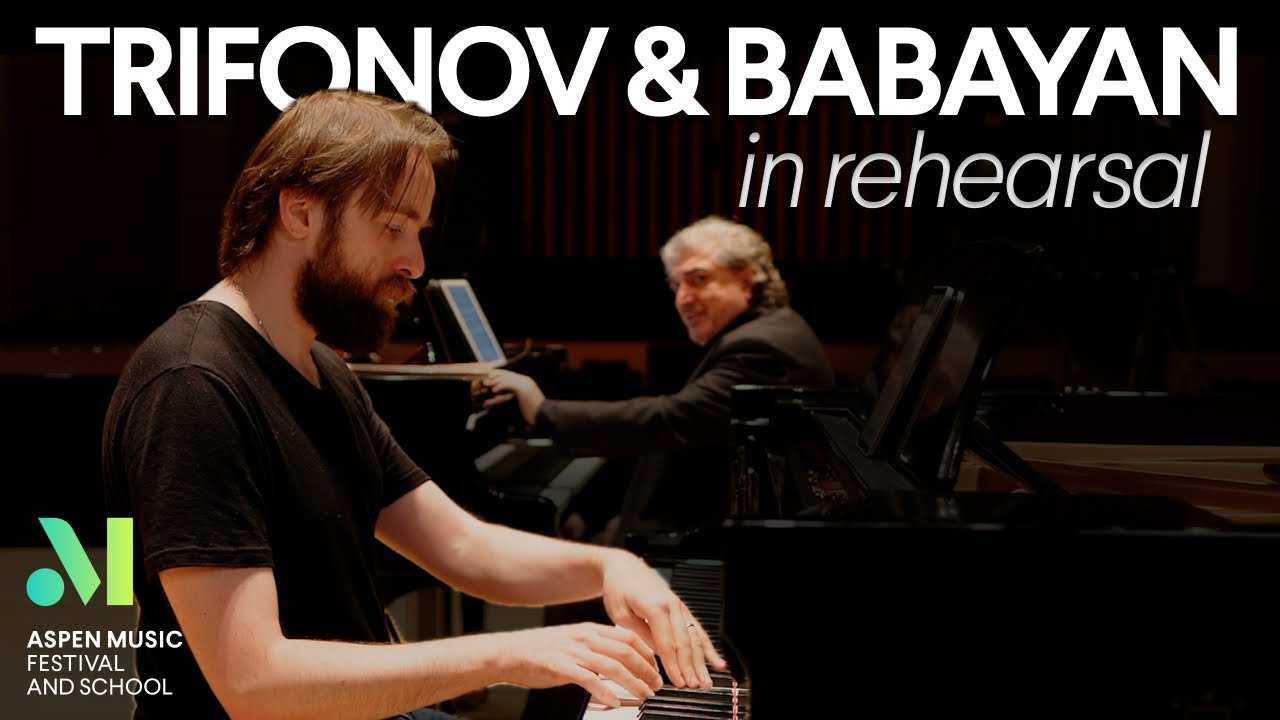
Inside a rehearsal with Daniil Trifonov and Sergei Babayan
Collaborations With Orchestras & Conductors
Trifonov has performed as soloist with virtually all of the world’s leading orchestras under many of today’s top conductors. His concerto appearances include engagements with ensembles such as the Chicago Symphony, Cleveland Orchestra, London Symphony and Philharmonia, Berlin and Vienna Philharmonics, the Philadelphia Orchestra, San Francisco Symphony, Bavarian Radio Symphony and Munich Philharmonic, Israeli Philharmonic, Orchestre National de France, Royal Concertgebouw, Bamberg Symphony, and others.
He has played under conductors like Simon Rattle (Berlin Philharmonic New Year’s Eve), Riccardo Muti (Chicago gala), Christian Thielemann, and the New York Philharmonic’s past music directors, as well as André Previn and Kurt Masur in earlier years.
In recent seasons he performed Brahms’s Second Piano Concerto with the Cleveland Orchestra under Franz Welser-Möst, and later with the Accademia Nazionale di Santa Cecilia under Daniel Harding.
He has also partnered with Klaus Mäkelä (Chicago Symphony Brahms), Cristian Măcelaru (Orchestre National de France concertos), Esa-Pekka Salonen (San Francisco Symphony and London Philharmonic), Rafael Payare (Montreal Symphony), Andris Nelsons (Gewandhaus Leipzig), Alan Gilbert (NDR Hamburg), Semyon Bychkov (Czech Philharmonic), and many others.
In chamber music he collaborates with stars like violinist Leonidas Kavakos (touring with him in violin-piano recitals) and baritone Matthias Goerne (recently in Schubert song recitals).
Recent Career Activity
Trifonov’s career remains very active. In 2024–25 he held season-long residencies with the Chicago Symphony Orchestra and the Czech Philharmonic.
Highlights included performing Brahms’s Second Piano Concerto under Chicago’s incoming chief conductor Klaus Mäkelä, and Dvořák’s Piano Concerto under Semyon Bychkov with the Czech Philharmonic at concerts in Prague, Toronto and at New York’s Carnegie Hall.
He opened the Leipzig Gewandhaus season with Mozart’s Piano Concerto No.25 under Andris Nelsons, and performed Prokofiev’s Second Concerto with Esa-Pekka Salonen and the San Francisco Symphony.
That season also saw him tour Europe with the Bamberg Symphony (playing Dvořák under Jakub Hrůša), appear with Rafael Payare and the Montreal Symphony in a multi-city tour of Schumann and Beethoven concertos, and give two programs at Carnegie Hall (one solo recital and one with violinist Kavakos).
In late 2024 he released My American Story: North (DG), a two-disc album pairing American piano works with concertos by Gershwin and Mason Bates.
Looking ahead, his 2025–26 schedule includes multiple Carnegie Hall programs: a Schubert song recital cycle with Matthias Goerne, a concerto program (Saint-Saëns and Ravel) with the Orchestre National de France under Cristian Măcelaru, and a solo recital touring Schumann, Taneyev and Prokofiev.
In fall 2025 Trifonov issued Tchaikovsky (DG), his album of solo piano works by Pyotr Ilyich Tchaikovsky, described as exploring the composer’s “intimate” and “private” side.
He remains a sought-after guest at festivals; for example, he was featured as an “artiste étoile” at the 2023 Lucerne Festival. As one recent critic noted, “few artists have burst onto the classical music scene in recent years with the incandescence of… Daniil Trifonov,” a testament to his continued prominence and impact.
Daniil Trifonov’s Piano Style And Interpretation
Technical Approach And Piano Control
Trifonov’s technique is widely noted for its extraordinary breadth and control. He exhibits nearly unlimited finger dexterity and stamina, enabling him to execute complex passages and rapid scales with apparent ease. Long runs come across as seamless streams of sound, and each hand can articulate independent voices clearly even in thick contrapuntal textures.
His dynamic control is equally impressive: he can play Classical repertory with a light, crystalline touch and then thunder through Romantic bravura when the music demands it. Reviewers emphasize that this technical mastery serves the musical content; every physical feat is deployed in support of the music’s structure and emotion rather than as mere display.
Tone, Touch, And Sound Color
Trifonov draws an unusually wide palette of tone from the piano. His touch yields everything from silken, bell-like pianissimos to a full-bodied, singing sonority in louder passages. Critics frequently comment that every note he plays, whether a whispered high tone or a powerful bass chord, comes through bright and clearly, with no loss of resonance.
His legato is especially notable: long melodies flow with a seamless, vocal quality while still preserving definition between phrases. At the same time, his staccati and accented figures remain crisp and clean, showing meticulous finger and wrist control.
Listeners often note that he can make the piano sing on sustained chords yet produce delicate, harp-like half-tones when required. In short, he is praised for extracting many colors from a piano, blending warm tonal richness and radiant clarity as the music calls for.
Rhythm, Phrasing, And Structural Clarity
Trifonov’s sense of rhythm and phrasing combines flexibility with coherence. He shapes musical lines with long, arching legato and subtle expressive timing: one reviewer likened his tempo rubato in Schumann to the transparent charm of a child’s storytelling. Even when he broadens a melodic climax or eases into a cadence, the underlying pulse remains steady.
In faster movements his playing is crisp and driven; for example, his performance of Schumann’s Toccata was described as having an improvisatory, even jazzy élan, with keen attention to rhythmic propulsion. In contrapuntal or formally complex works, such as Shostakovich fugues or Liszt piano transcriptions, he maintains clear rhythmic discipline so that every voice can be heard within the whole structure.
The result is phrasing that clearly delineates the architecture of a piece: motifs lead naturally into one another, and climaxes are reached through well-timed accelerations or pauses. Throughout, reviewers note, Trifonov never loses the music’s larger shape, making each phrase part of an intelligible musical narrative.
Interpretative Approach To Repertoire
Trifonov tackles a wide variety of repertoire with sensitivity to each composer’s style. He especially excels in Romantic and virtuoso works: critics have highlighted how he combines power and lyricism in Liszt and Rachmaninoff, turning technical fireworks into elegance and expressive depth.
His Liszt Études, for example, are played with astonishing precision but with a refinement that suggests an understanding of the music’s harmonic beauty. In Schumann or Chopin he brings out poetic nuance, a gentle simplicity in a Schumann character piece or a searching expressiveness in a Chopin prelude, without losing momentum or drive.
Trifonov is also attentive in twentieth-century and Impressionist works: in Debussy and Ravel he balances tonal clarity with atmosphere, making a piece shimmer with delicate colors or pulse with rhythmic spark without ever sounding heavy-handed.
By contrast, when playing Classical-era works such as Mozart, Beethoven, or Saint-Saëns, he adjusts his style for refinement and poise, using a lighter touch and transparent voicing. In Saint-Saëns or Mozart concertos his articulation is quicksilver and buoyant, reflecting the style’s grace.
Across his repertoire, the consensus is that he respects the score’s essentials: he usually avoids exaggerated sentimentality or decorativeness, instead finding fresh insight in how he shapes each composer’s characteristic gestures.
Balance Between Precision And Expression
Across his playing, Trifonov achieves a notable equilibrium between strict accuracy and heartfelt expression. His technical precision in finger articulation, rhythmic pulse, and dynamic control is always matched by a clear musical purpose. Rather than rendering the music as cold or mechanical, this precision is used to illuminate emotional content.
For example, critics observe that even Trifonov’s most monumental passages are delivered without excess: wide dynamic swings serve the music’s logic, and no detail feels gratuitous. At the same time, many have pointed out the warm, lyrical quality underlying his accuracy.
A reviewer noted an especially telling quality in his touch: it can be fiercely powerful in climaxes yet always retains a tenderness at its core. In this way, his polish and rigor actually amplify expression, because every note is shaped with intent.
One critic summarizes that explosive fire and power and subtle color complement each other, none takes precedence, resulting in music-making that feels honest and complete.
Critical Observations And Musical Identity
Critics generally frame Trifonov’s musical identity in terms of the rare combination of talents he brings to the keyboard. Early reviews marveled at his superpianist gifts: an extraordinarily broad technique paired with a rich tone.
They noted, too, a depth beyond mere bravura: his playing can evoke an inward, poetic quality even in wild passages. Over time the dominant critical impression has been that Trifonov balances these extremes into a coherent artistic persona.
His performances are often described less as imposing a personal stamp and more as forging a partnership with the music, revealing the work itself. For instance, in Schumann’s dualistic music he simultaneously gave voice to both its playful and anguished sides, as if Schumann’s contrasting characters were conversing.
In sum, reviewers agree that Trifonov’s style is defined by his precision, tonal richness, and imaginative phrasing. He is seen as avoiding mannered showmanship: his identity at the keyboard comes through in the clarity of every detail and the consistency of his interpretive vision.
This blend of intellectual insight and expressive passion now characterizes his mature style, marking him as a pianist of distinctive voice in today’s scene.
Daniil Trifonov Performance (2025–2026)
- Nov 2025:Trifonov joined conductor Cristian Măcelaru and the Orchestre National de Francefor a U.S. tour, including a Carnegie Hall concert where he performed Saint-Saëns’s Piano Concerto No. 2. Critics praised his “texturally clean” and dynamic interpretation of the work.
- Dec 2025:Solo recital at New York’s Carnegie Hall (Stern Auditorium)featuring an adventurous program of rarely heard Romantic and 20th-century works (Taneyev, Myaskovsky, Prokofiev, Schumann), underscoring Trifonov’s commitment to deep, virtuosic repertoire.
- Late 2025:US recitals with baritone Matthias Goerneperforming Schubert song-cycles (Winterreise, Die schöne Müllerin, Schwanengesang). Reviews lauded Trifonov’s “utmost sensitivity” and rich tone; Goerne himself praised Trifonov’s “boundlessness, maturity, and understanding” in these performances.
- Jan 2026:Featured soloist with the Cincinnati Symphony(Conductor Cristian Măcelaru) in Beethoven’s Piano Concerto No. 2, demonstrating his mastery of large-scale orchestral repertoire.
- Apr 2026 (Seattle):Performed Saint-Saëns’s Piano Concerto No. 2 with the Seattle Symphonyunder Music Director Xian Zhang (on a program of French masterpieces), further cementing his standing as a top-tier concerto soloist.
- Apr 2026 (Portland):Soloist with the Oregon Symphony(Conductor David Danzmayr) in both of Shostakovich’s Piano Concertos (Nos. 1 & 2) in one evening, a virtuosic feat noted as a “dazzling” display of technique.
- May 2026:Participated in Carnegie Hall’s 50th-anniversary “Concert of the Century” gala (Conductor Yannick Nézet-Séguin), a high-profile event celebrating classical music legacy.
- Aug 2026 (Grafenegg):Chamber recital with violinist Sergei Dogadin in the new Rudolf Buchbinder Hall, program included Prokofiev’s Violin Sonata No.1 and Shostakovich’s 24 Preludes (performed as an Austrian premiere), showcasing his prowess in intimate chamber music.
- Aug 2026 (Salzburg):Soloist with the Vienna Philharmonic under Andris Nelsons at the Salzburg Festival, performing Rachmaninoff’s Piano Concerto No. 3, underscoring his role as a sought-after soloist with world-class orchestras.
Daniil Trifonov Net Worth
As of 2025, reliable sources have not published an estimate of Daniil Trifonov’s net worth. Trifonov is a Russian Grammy-winning classical pianist and composer whose income comes mainly from concerts and recordings. He regularly tours internationally and performs with major orchestras, giving solo recitals at prestigious venues such as Carnegie Hall. He also records albums on major labels like Deutsche Grammophon, and his albums have enjoyed strong sales, with seven of them reaching Billboard’s Top Classical Albums chart. Overall, his earnings come from concert fees, album sales and music royalties.
FAQs
Who Is Daniil Trifonov?
Daniil Trifonov is a Russian classical pianist and composer, born on March 5, 1991, noted for his virtuosity and expressive depth as a performer. He studied in Moscow and at the Cleveland Institute of Music and has an international performing career as a soloist and chamber musician.
What Is Daniil Trifonov Famous For?
Trifonov is best known for his performances of major piano repertoire in international concert halls and with leading orchestras, and for a distinguished recording career with labels such as Deutsche Grammophon. His acclaim grew after major competition wins and wide recognition for his technical mastery and interpretive insight.
Has Daniil Trifonov Won A Grammy Award?
Yes, Daniil Trifonov won the Grammy Award for Best Classical Instrumental Solo in 2018 for his recording of Franz Liszt’s complete Transcendental Études. He has also received multiple Grammy nominations across his discography.
Which Composers Are Most Associated With Daniil Trifonov?
Trifonov is particularly associated with Romantic and early-20th-century repertoire, including works by Franz Liszt, Sergei Rachmaninoff, and Frédéric Chopin, and regularly performs music by Bach, Beethoven, Schumann and Prokofiev. His recordings and programs often highlight these composers’ piano works.
Does Daniil Trifonov Compose His Own Music?
Yes, Trifonov also composes and has written works for piano and chamber ensemble, including his own piano concerto and solo pieces that he performs in concert. His compositional work complements his career as a performer.