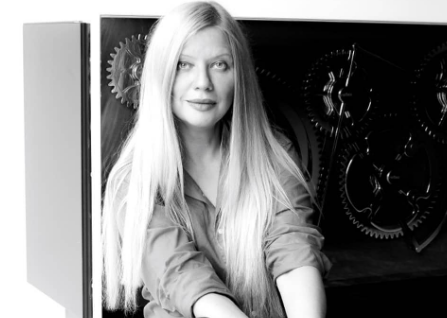
Valentina Lisitsawas born in Kiev (then part of the Ukrainian SSR, now Kyiv, Ukraine) in 1973. She grew up in Kiev in a family without any musical background. Her mother, also named Valentina, was a seamstress and encouraged her daughter’s musical talent – she hoped Lisitsa would use her talent in a teaching career.
Lisitsa began studying piano at age three, and gave her first public solo recital by age four. Her early training took place at Kiev’s Lysenko Music School for Gifted Children, a specialized school for talented young musicians. She later continued her formal music education at the Kiev Conservatory.
In childhood Lisitsa also loved chess, at one point dreaming of becoming a professional chess player. Ultimately, however, her musical talent prevailed, and she focused on her piano studies from an early age.
| Aspect | Details |
| Full Name | Valentina Evgenyevna Lisitsa |
| Year of Birth | 1973 |
| Place of Birth | Kyiv, Ukraine (formerly Ukrainian SSR) |
| Family Background | Non-musical household |
| Mother’s Profession | Seamstress |
| Early Support | Mother encouraged piano study |
| Piano Start Age | Age 3 |
| First Public Recital | Age 4 |
| Early Schooling | Lysenko Music School, Kyiv |
| Higher Education | Kyiv Conservatory |
| Childhood Interests | Piano and chess |
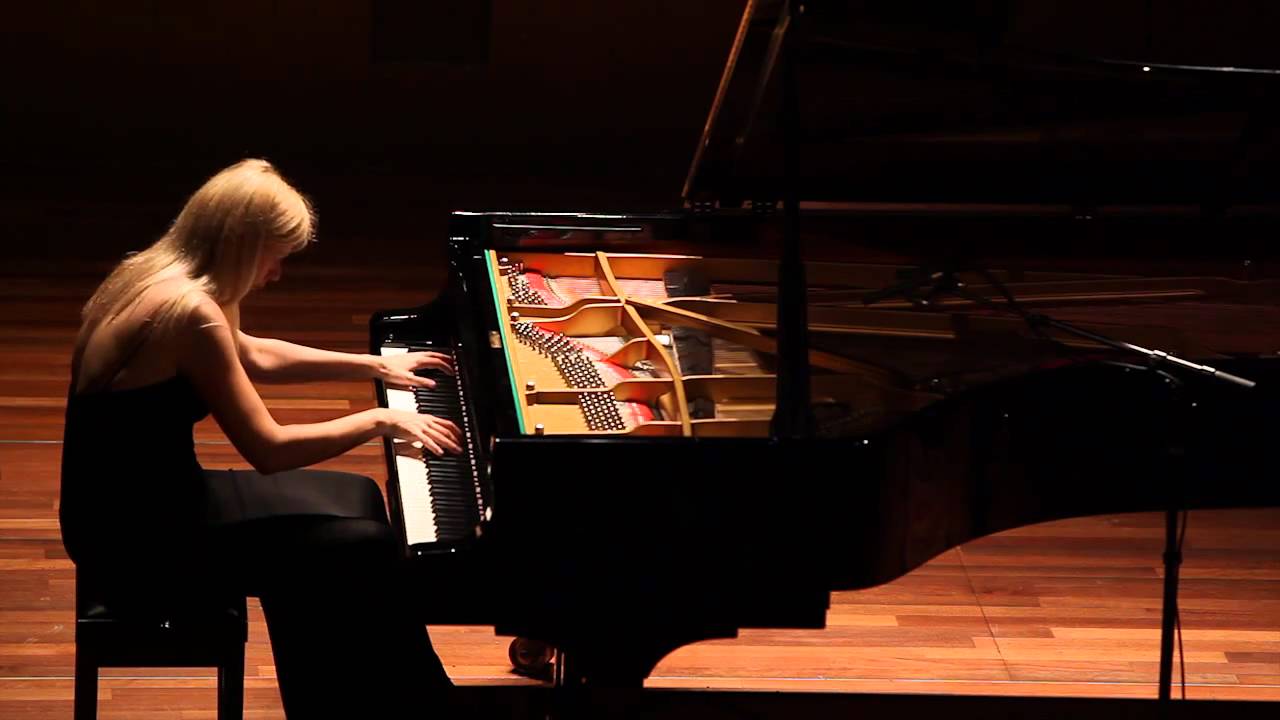
Valentina Lisitsa plays Liszt's Hungarian Rhapsody No. 2
Career Beginnings
Valentina Lisitsa showed extraordinary musical promise from an early age. Born in Kiev in 1973, she began playing piano at age three and gave her first public recital at four. She trained at Kyiv’s Lysenko Music School for Gifted Children and continued her studies at the Kyiv Conservatory under Ludmilla Tsvierko.
In her student years she met pianist Alexei Kuznetsoff; the two performed together as a piano duo. The couple won the prestigious Murray Dranoff Two-Piano Competition in Miami in 1991, and Lisitsa made her U.S. debut at New York’s Mostly Mozart Festival in 1995.
Reflecting on her early career, Lisitsa later said that by 2007 “I didn’t have an audience or concerts… I was at home with my son, wondering what to do with my life, so I put a clip on YouTube.”
International Breakthrough
Lisitsa’s major break came through the internet rather than traditional concert touring. In 2007 she posted a home-made performance video of Rachmaninoff’s Etude Op. 39 No. 6 on YouTube, and it quickly went viral.
Over the next few years she uploaded dozens of videos, covering Romantic and modern repertoire, which amassed over sixty million views and hundreds of thousands of subscribers.
This online popularity culminated in her first world-class recital: in June 2012 she sold out the 8,000-seat Royal Albert Hall in London. The hall recorded and broadcast the concert live on YouTube, and the performance was released by Decca Classics (her new label) that summer.
Lisitsa herself credited her fans for this success, saying “I could not have done this without all my online fans around the world… that’s the best reward for my hard work.” By combining her virtuosic playing with a direct connection to listeners, she gained an international profile overnight, landing a major recording contract and a global touring schedule.
Major Performances & Concert Highlights
Since 2012 Lisitsa has maintained a busy international concert career. She has given recitals at many of the world’s great halls, including London’s Wigmore Hall, New York’s Carnegie Hall and David Geffen Hall, the Théâtre des Champs-Élysées in Paris, and the Great Hall of the Moscow Conservatory.
She has performed at renowned festivals such as the BBC Proms in London, the Dvořák Prague Festival, and the Musica Mundi Chamber Music Festival in Brussels.
In 2019 she played a one-evening marathon of Rachmaninoff with the Spanish National Orchestra at Madrid’s Auditorio Nacional, all four piano concertos plus the Rhapsody on a Theme of Paganini, in a sold-out event.
Her programs often span a wide range, from solo piano recitals of Chopin, Liszt or Schumann to monumental projects like performing Rachmaninoff’s complete Preludes. These concerts have established her reputation for dazzling technique and high-energy interpretation on the world’s top stages.
Recordings & Discography
| Recording Focus | Details |
| First Major Release | Live Royal Albert Hall recital (Decca, 2012) |
| Romantic Repertoire | Chopin, Liszt, Scriabin |
| Rachmaninoff Works | All four piano concertos with London Symphony Orchestra |
| Film Music Album | Love Story – Piano Themes from Cinema’s Golden Age (2016) |
| Box Set | Tchaikovsky complete solo piano works (2019) |
| Naïve Label | Scriabin, Ravel, and Chopin releases (2022) |
| Personal Label | “Queen of Rachmaninov” project for Beethoven sonatas |
Lisitsa’s discography is extensive and eclectic, spanning Romantic masterpieces to contemporary works. After her Royal Albert Hall debut, Decca Classics released the live recital as her first major album (2012).
She went on to record all four of Rachmaninoff’s piano concertos (with the London Symphony Orchestra) and collected piano works by Chopin, Liszt, Scriabin and others on Decca.
She has championed modern composers as well, releasing albums of Philip Glass (2015) and Michael Nyman (2014) piano music.
In 2016 Lisitsa issued Love Story – Piano Themes from Cinema’s Golden Age(Decca), a collection of 20th-century film-score piano pieces. In 2019 Decca issued an 8-CD box set of Lisitsa performing Tchaikovsky’s complete solo piano works.
More recently, under a new deal with the Naïve label in 2021, she released several albums of early 20th-century repertoire: works by Alexander Scriabin and by Maurice Ravel appeared in early 2022, followed by a Chopin collection.
Lisitsa also launched her own “Queen of Rachmaninov” label for special projects, such as an ongoing multi-volume recording of Beethoven’s complete piano sonatas.
Awards & Professional Recognition
Lisitsa’s early accolades include the first prize at the Murray Dranoff Two-Piano Competition (Miami, 1991) shared with Alexei Kuznetsoff.
Throughout her career she has received widespread critical praise. Classical music media have noted her groundbreaking rise; for example, Classic FM describes her as “one of the most frequently viewed pianistson YouTube,” reflecting her massive online audience.
Critics have lauded her powerful yet sensitive playing. Her achievements — blending traditional virtuosity with modern outreach — have earned her a distinctive status in the classical community, and she often appears on lists of leading concert pianists worldwide.
Collaborations With Orchestras & Conductors
Lisitsa has appeared as soloist with many of the world’s leading orchestras. Notable collaborators include the London Symphony Orchestra, the Royal Stockholm Philharmonic, Orchestre de Paris, Staatskapelle Dresden, Cincinnati Symphony, Baltimore Symphony and the Seoul Philharmonic, among others.
She recorded Rachmaninoff concertos with the LSO under conductor Michael Francisand has premiered new transcriptions by contemporary composers.
Earlier in her career she worked on recordings of Shostakovich’s Cello Concerto (with cellist William DeRosaand conductor Sarah Caldwell).
In chamber music she performed an extensive duo recital tour with violinist Hilary Hahn(2000–2002), and she has recorded violin sonatas with Hahn. Throughout her concert work, Lisitsa regularly collaborates with prominent conductors and soloists, reflecting her versatility as both solo and ensemble musician.
Recent Career Activity
In recent years Lisitsa continues to expand both her performing and recording activities. In 2021 she signed a long-term agreement with the French label Naïve Classique, and in early 2022 released new albums of Scriabin, Ravel and Chopin under that partnership and her own imprint.
She remains a popular live artist internationally: for example, in 2022 her YouTube channel surpassed 700,000 subscribers and 300 million total views, underscoring her ongoing reach.
Looking ahead, Lisitsa has scheduled a major China tour in October 2025, with recitals in Shanghai, Guangzhou, Tianjin, Beijing, Chengdu and Xi’an. The announced program features Rachmaninoff’s complete 24 Preludesand Liszt’s piano transcription of Beethoven’s Third (“Eroica”) Symphony, showcasing both her deep commitment to the Romantic repertoire and her love of ambitious concert projects.
Of her new recording contract, Lisitsa said, “I am very excited about this new partnership with the Naïve team!”– reflecting her enthusiasm for future projects.
Valentina Lisitsa - Fantasie Impromptu, Op. 66
Valentina Lisitsa Performance (2025–2026)
- Apr 29, 2025 – Lugano, Switzerland: Solo benefit recital “Un seme per il futuro”at the Palazzo dei Congressi (supporting Steiner school education), blending Lisitsa’s classical virtuosity with a charitable mission.
- Nov 2, 2025 – New York, USA: Featured performer in “The 7 Pianists”concert at Carnegie Hall’s Stern Auditorium, joining six other leading pianists in a unique ensemble program combining classical and jazz repertoire.
- Oct 17, 2025 – Shanghai, China: Solo recital at the Shanghai Oriental Art Center, presenting Rachmaninoff’s 24 Preludes and Liszt’s transcription of Beethoven’s “Eroica” Symphony, a high-profile concert at one of Asia’s premier venues.
- Oct 25, 2025 – Beijing, China: Solo recital at the Forbidden City Concert Hall(Zhongshan Park), featuring Lisitsa’s signature Rachmaninoff preludes and a Liszt–Beethoven symphony transcription, showcasing her technical mastery on China’s stage.
- Late 2025 – Europe & South America tour: Recitals at Società del Whist/Accademia Filarmonicain Turin (Italy) and at Teatro Colsubsidio in Bogotá (Colombia), extending her international reach with solo concerts in major cultural centers.
- Oct 2025 – South Africa: Concert engagements with the KwaZulu-Natal Orchestra(Durban) and Johannesburg Philharmonic, plus a solo recital in Durban, demonstrating Lisitsa’s collaborative work with respected orchestras abroad.
Valentina Lisitsa’s Pianistic Style And Interpretation
Technical Approach And Piano Control
Critics consistently highlight Lisitsa’s formidable technique and command of the keyboard. Her performances often display clean, agile fingerwork, enabling rapid execution of demanding passages. Reviewers note that she tackles towering virtuosic works (for example, Scriabin’s Etudes or Chopin’s Op.10 and Op.25) with power to spare, often seeming to have extra energy in reserve.
The pianist’s wrist flexibility and mastery of large intervals give her notable ease in tricky sections. She frequently uses precise control of arm and hand motion, carefully managing pedaling and release to articulate even the most complex textures.
In fast, turbulent passages Lisitsa maintains surprising accuracy; a critic observed her handling of rapid octaves “like a reliable machine,” keeping perfect rhythmic unity in fierce finales. At the same time, she is capable of calm, gentle playing: even in delicate scores Lisitsa’s steady technique yields a stable, unforced flow of notes.
Overall, her control of dynamics and articulation is uncommonly sure, giving her the freedom to shape phrases at will while keeping even the densest music impeccably clear.
Tone, Touch, And Sound Color
Lisitsa uses a wide palette of tone colors. Reviewers point out the rich variety of hues she draws from the piano from warm, singing legato lines to crisp, percussion-like attacks.
Her soft playing can be extremely refined and focused: in Chopin’s lyrical music or Scriabin preludes her touch has been described as gentle and luminous, revealing inner voices without undue roughness. At the same time, her forte can produce a massive, resonant sound.
In climactic moments she is willing to flood the hall with volume or, conversely, reduce to an almost barely audible whisper; this contrast gives her performances a dramatic range. Lisitsa is also noted for careful pedaling: critics have praised her ability to sustain a single tone through delicate pedal shifts, achieving phrasing in Scriabin and Chopin that feels almost vocal in clarity.
When playing works originally written for other pianos(for example Scriabin on Steinway), Lisitsa sometimes adjusts her touch to emulate an older instrument’s sonority, yielding an effect akin to a late-19th-century Bösendorfer in brightness and warmth.
In ensemble or concerto textures, her tone comes across as transparent yet full, balancing evenly across registers so that, for example, inner voices in Chopin Etudes “sing” through the surface. In short, Lisitsa’s touch ranges from crystal clear delicacy to thunderous intensity, and she seems to coax all possible colors from the piano under her fingers.
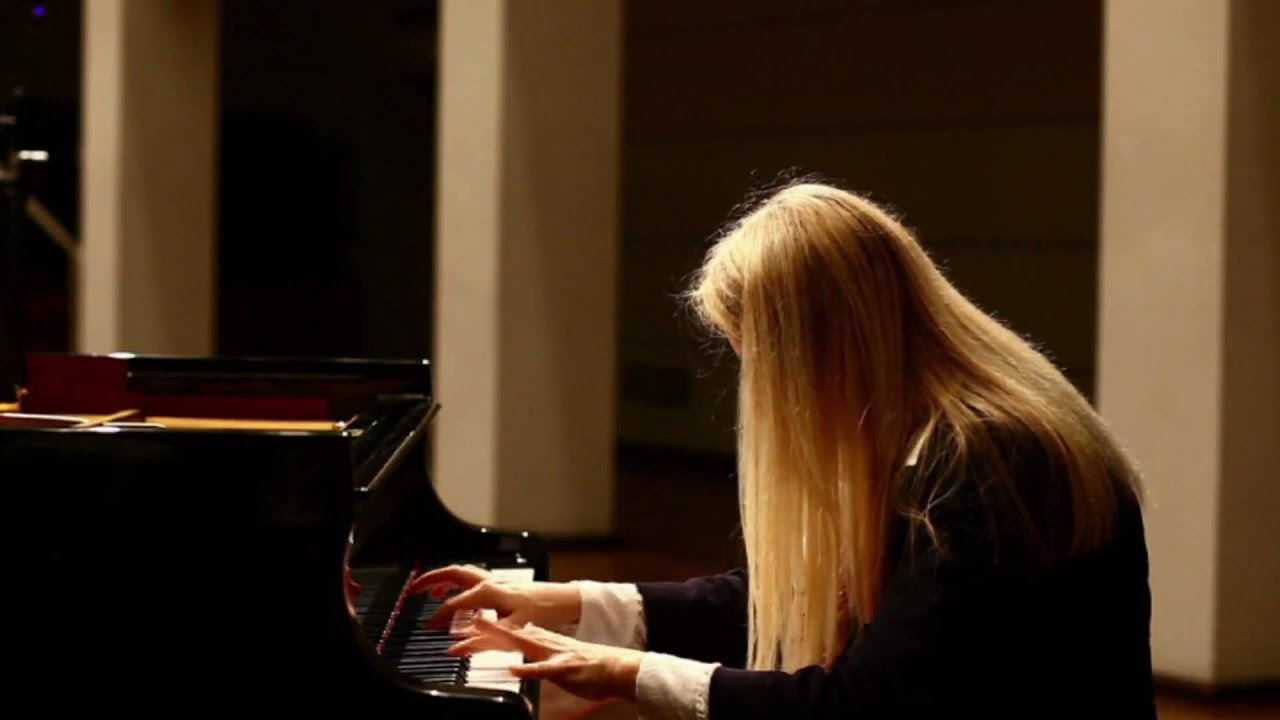
Beethoven "Moonlight" Sonata, III "Presto Agitato" Valentina Lisitsa
Rhythm, Phrasing, And Structural Clarity
Rhythmic drive and phrase-shaping are central to Lisitsa’s style. She often moves through music with a sense of flowing momentum, especially in virtuosic pieces. For example, her interpretations of Chopin’s Etudes and Liszt’s Hungarian Rhapsodies use propulsive rhythms and well-defined accents.
Critics have noted her flexibility with tempo: she commonly adopts spontaneous rubato, speeding up or slowing down within phrases to underline musical contrasts. In Chopin it has been likened to a “gypsy-like” rhythmic lilt, with ebbs and surges in tempo emphasizing the piece’s dramatic arcs.
Yet even as she varies timing expressively, Lisitsa usually keeps the underlying pulse clear, so that the music’s large-scale structure is never lost. In Bach, Mozart, or Beethoven passages she tends to favor steady beats and clean articulation, giving the form exact clarity.
In Schumann and Liszt songs transcriptions, observers emphasize her legato phrasing: she makes cantabile melodies sing out, often with “Lieder-like” continuity, as if each note naturally leads to the next.
Even in the most fiery passages, her rhythmic articulation is crisp: rapid repeated figures and octaves are played with evenness and pinpoint precision, defining the pulse of the music. When she takes faster tempi, Lisitsa’s careful control ensures that lines remain coherent and that voices are balanced.
Overall, Lisitsa combines a firm sense of beat with creative phrasing; she will stretch time for expressive effect, but always within a clear framework so the composition’s shape stays intact.
Interpretative Approach To Repertoire
Lisitsa is principally associated with Romantic and late-Romantic repertoire, and her interpretative style reflects that. She has championed composers like Frédéric Chopin, Franz Liszt, Alexander Scriabin, and Sergei Rachmaninoff.
In Chopin, for instance, she emphasizes the bel canto nature of the music: melodic lines are given a vocal quality, often delivered with broad, passionate sweep. Reviewers have compared her lyrical warmth and use of rubato favorably to pianists like Arthur Rubinstein, noting her tendency to highlight the opera-like phrasing in Chopin’s melodies.
In Liszt (especially transcriptions of Schubert songs), she similarly shapes each melody with care, laying bare the inner tunes while leaping effortlessly over the virtuosic obstacles.
In high Romantic concertos (Rachmaninoff, Prokofiev), Lisitsa tends to adopt brisk tempos and emphasize dramatic contrasts: she drives fast movements forward with mechanical precision while in slow movements she may favor a searching, introspective pace.
Critics have sometimes felt she underplays some climactic tension in very Romantic slow movements, opting for a meditative approach rather than a strongly dramatic one.
By contrast, Lisitsa’s approach to Classical-era works (Mozart, early Beethoven) appears more straightforward. There are fewer records of her performing Mozart concertos or Beethoven sonatas, but those critics who have heard her do so find that she plays them cleanly, with an emphasis on clarity over ornament or historical affect.
In recordings and YouTube videos, Lisitsa’s Mozart interpretations tend to be unembellished and earnest. Her Beethoven can be robust: a review of her Appassionata noted that she played it “cleanly” but with a heavy, deliberate pulse.
In sum, Lisitsa seems most at home in music that allows expressive freedom and rich sonority. She brings a similar spirit to modern or 20th-century composers; for example, her performances of Scriabin show a keen sense of color and mysticism, evoking the composer’s own expressive ambiguity.
In programs that mix styles, Lisitsa often links pieces by narrative or emotional through-line, as when she juxtaposed Chopin and Scriabin to highlight their artistic kinship. Each work is given a distinct identity in her playing whether fiery and bold or dreamy and introspective with Lisitsa using her technical command to serve the character of the music.
Balance Between Precision And Expression
Lisitsa’s style is frequently described as highly precise. She prioritizes clarity and accuracy: fast runs and complex figurations are executed with numerical exactness, and rhythmic entrainment is tight. This technical precision is a hallmark of her sound.
However, listeners and critics observe that she balances this with overt expression. In many performances, no note or accent feels accidental; every dynamic shift and tempo change is carefully planned. As one commentator put it, her playing shows “note-perfect” technique married to genuine communicative intent.
She is willing to sacrifice some traditional poetic subtlety for vivid contrast. For example, Lisitsa often makes bold choices about tempo and volume to heighten drama: rapid sections may be taken even faster than usual, and long crescendos or dimuendos clearly outline form.
That said, some observers feel her focus on precision occasionally comes at the expense of deeper spontaneity. A few critiques point out that her interpretations can be a bit uniform in tone, or that rubato is used more as a show of freedom than as an organic gesture.
In Chopin nocturnes and slower pieces, critics have sometimes found her approach too deliberate or slow, noting that long, reverie-like tempos can flatten the music’s architecture. In this sense, Lisitsa’s style tends towards cerebral control over freewheeling romance.
Nonetheless, even when she seems to hold back a bit for instance, not indulging in wild, Handelian virtuoso displays she is often praised for making every technical detail musical. The balance she strikes is therefore one of exactitude supporting expression: the clarity of her touch ensures that even the most passionate moments are carefully shaped, and her expressive gestures (dynamic surges, phrase rubato) stand out clearly.
Listeners either delight in this confident precision or sometimes wish for more warmth in the rubato, but it is undeniable that Lisitsa delivers both unmistakable command and communicative flair in her playing.
Critical Observations And Musical Identity
Overall, Valentina Lisitsa is recognized as a virtuoso pianist with a strongly individual stamp. Her identity in the concert hall (and online) is built on dazzling technique, but also on a willingness to present music on her own terms.
Critics often note her flamboyant bravura: she is one of the few pianists unafraid of maximum volume or extreme tempi. Her recorded and filmed performances reveal a performer who rarely shirks challenge for example, she was among the first to release all the Chopin Etudes on YouTube which has earned her a reputation for fearlessness.
At the same time, her musical persona is consistently serious rather than showy: she tends to avoid superficial glitz, instead using each technical effect toward conveying the character of the piece. Reviewers remark that even as a “YouTube star,” Lisitsa’s public image is down-to-earth, and this humility carries into her playing; she does not exaggerate for effect but simply plays wholeheartedly.
Lisitsa’s style has sparked varied opinions. Supporters admire her riveting authority and compelling energy a critic said that in her recent performances she captures attention from the first note, and that her playing can be mesmerizing in its sheer confidence.
Detractors occasionally point out that her speed and clarity can verge on sterility, arguing that she sometimes misses the emotional core in search of perfection. Yet even critics concede that she “puts her own stamp” on repertoire, often finding new colors or emphases that differ from more traditional readings.
In sum, Lisitsa’s musical identity is that of a pianist who marries technique and expression in a distinctive, modern way: she embodies 19th-century Romantic fire but delivers it with 21st-century technological precision. Her interpretations have the weight and fullness expected of grand piano works, along with a personal intensity.
Whatever one’s taste, it is clear that Lisitsa’s playing speaks with a confident, expressive voice that many listeners find as powerful as it is precise.
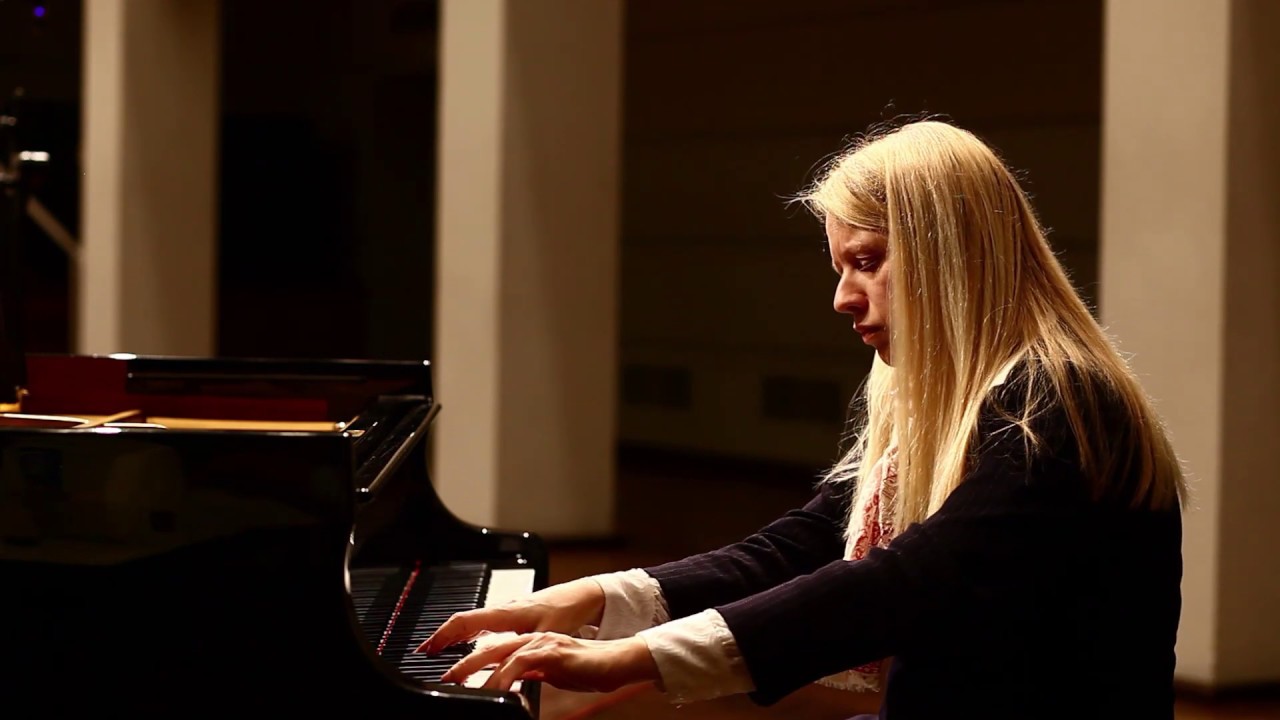
Beethoven Sonata # 14 "Moonlight" Op. 27 No. 2 Valentina Lisitsa
Valentina Lisitsa Net Worth
As of 2026, entertainment websites estimate Valentina Lisitsa’s net worth to be between $3 million and $5 million. These figures come only from online trackers, and no major financial outlet (such as Forbes) has independently verified them. Lisitsa is a classical concert pianist who launched her career via social media and YouTube. She has recorded six albums for Audiofon Records and performs worldwide at prestigious venues (e.g., Carnegie Hall and the Royal Albert Hall), generating income through album sales and concert fees.
FAQs
1. Who Is Valentina Lisitsa?
Valentina Lisitsa is a Ukrainian-born classical concert pianist known for her virtuoso technique and large online following. She gained international recognition after her piano performances went viral on YouTube in the late 2000s.
2. Where Was Valentina Lisitsa Born And Trained?
Valentina Lisitsa was born in Kyiv (then part of the Ukrainian SSR) in 1973. She studied at the Lysenko Music School for Gifted Children and later at the Kyiv Conservatory.
3. How Did Valentina Lisitsa Become Famous?
Valentina Lisitsa became widely known after uploading piano performance videos to YouTube in 2007. Her online success led to major concert engagements and a recording contract with Decca Classics.
4. What Is Valentina Lisitsa Best Known For Musically?
Valentina Lisitsa is best known for her interpretations of Romantic and late-Romantic composers, especially Rachmaninoff, Chopin, Liszt, and Scriabin. She is also recognized for performing large-scale and technically demanding programs.
5. Is Valentina Lisitsa Still Performing Internationally?
Yes, Valentina Lisitsa continues to perform internationally as a soloist and with orchestras. Her recent and upcoming engagements include concerts in Europe, Asia, Africa, and the Americas through 2025–2026.